The first step of the Moroccan hammam
It is not a bar and it does not foam. It is a soft, dark paste of olive oil and macerated olives, saponified with potash — three ingredients, the same three for centuries. You spread it on, you wait, and then the kessa glove does the rest.
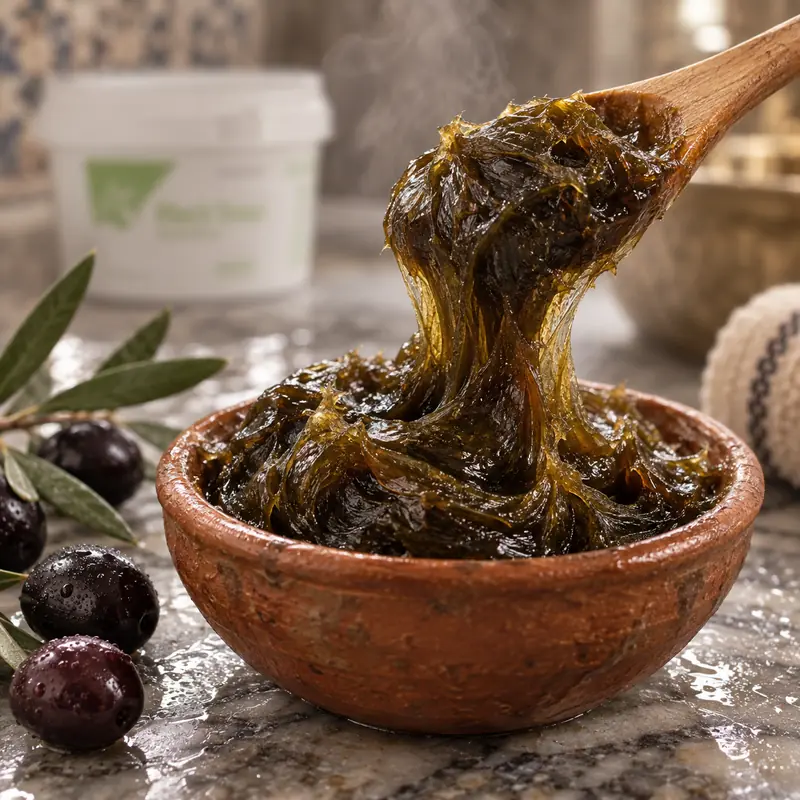
A jar of thick, dark green paste, somewhere between olive oil and tar to look at, smelling of olives. That is correct. Beldi soap has never been pressed into a bar, and a bar sold under the name is something else.
The reason is the potash. Soap is what you get when a fat meets an alkali: with soda you get a hard soap, with potash you get a soft one. Moroccan soap-makers have always used potash — it came from wood ash — so the soap stays a paste, and it stays a paste in the jar for three years.
It will not lather either. Lather comes from added foaming agents, and there are none here. A thin film spread over damp skin is all it needs to do its job. Like every true soap it is alkaline, which is why it is rinsed off rather than left on, and why the oil afterwards is part of the ritual and not an upsell.
Plain about what it does. Black soap cleans and softens the skin so that dead cells lift away with the glove. It is a cosmetic, not a treatment: it does not heal, and it is not a remedy for any skin condition. If your skin is giving you trouble, ask a doctor rather than a soap. As with any new product, try a little on the inside of the forearm first, and keep it away from the eyes.
Whole olives are left to macerate in salt until they break down, then blended with olive oil and heated with potash until the mixture thickens and darkens. That is the entire recipe: olives, potash, water. The potassium hydroxide is fully consumed in the process — there is none left in the jar.
What separates one black soap from another is the olive oil, and ours comes from Moroccan mills. It is the same soap that has been made in the same way in hammams for generations, put in a jar with a lid instead of sold by the ladleful from a bucket.
The soap on its own does very little. The sequence is what works, and it has five steps — the fourth is the one people skip and the fifth is the one they regret skipping.
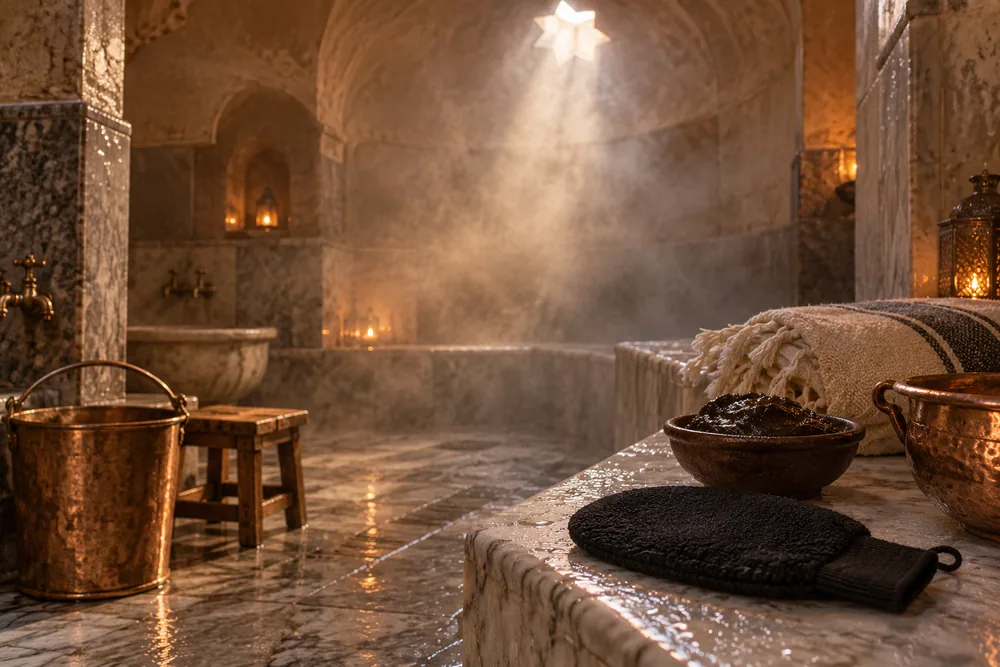
Warm the skinTen minutes in a hot shower or a steam room. The soap works on skin that is already soft and damp — this step is not optional, it is half the result.
Spread it onA walnut-sized amount for the whole body, spread thin. It is a paste, not a bar: it will not foam, and it is not supposed to.
Leave itFive to ten minutes, while you stay in the steam. This is when the dead skin softens.
Scrub with the kessaRinse the soap off first, then work the damp kessa glove in long strokes, limbs towards the heart. What comes off is startling the first time. Once or twice a week, no more.
Rinse, then oilWarm water, then argan or prickly pear seed oil while the skin is still damp. Skipping this last step is why people sometimes say the hammam left them dry.
The proper use, once or twice a week, with the glove. The rest of the week a normal shower is plenty.
A very small amount, no glove, rinsed with cool water. Follow with an oil while the skin is damp.
Occasionally, as a deep clean before a ghassoul mask. It strips more than a shampoo does, so not as a routine.
Spread thin, left a minute. It softens the hair and the razor drags less. An old habit, and a good one.
The same olive paste in all six. What changes is what is blended in, and the smell it leaves in the steam. Every one comes in four sizes, from 150 g to a kilo.
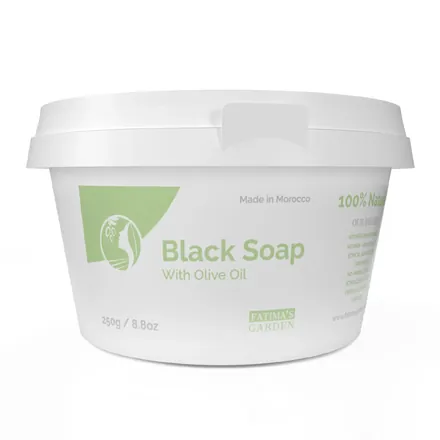 With olive oilOlives and nothing else. What a hammam actually uses, and the one to buy by the kilo.Choose this one →
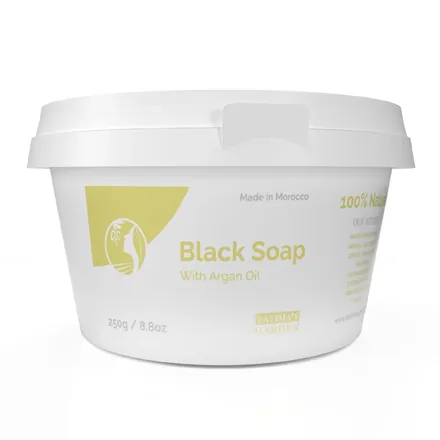 With argan oilArgan oil worked into the paste. A little richer — for dry skin, and for winter.Choose this one →
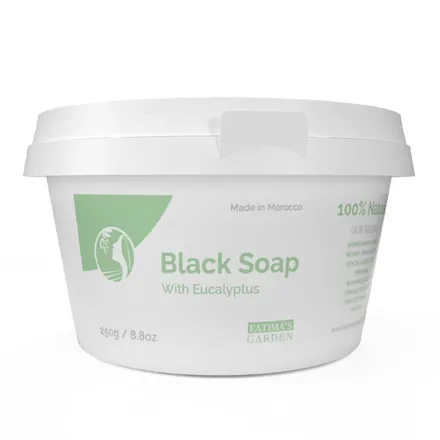 With eucalyptusEucalyptus for the smell, which fills the room the moment the steam rises.Choose this one →
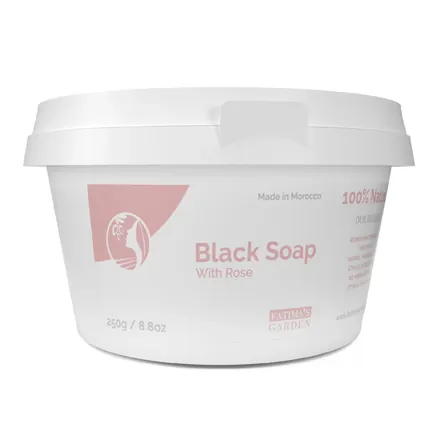 With roseDamask rose, the gentlest of the four. Follow it with rose water and a light oil.Choose this one →
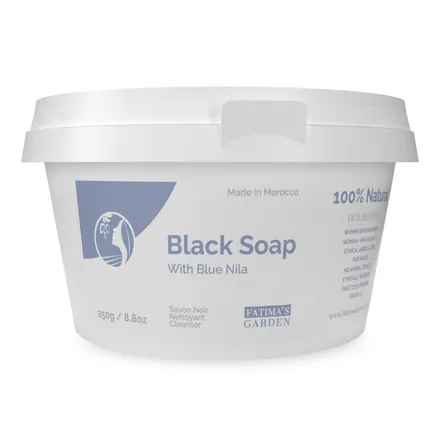 With blue nilaNatural indigo milled into the paste. It colours the soap, not the skin.Choose this one →
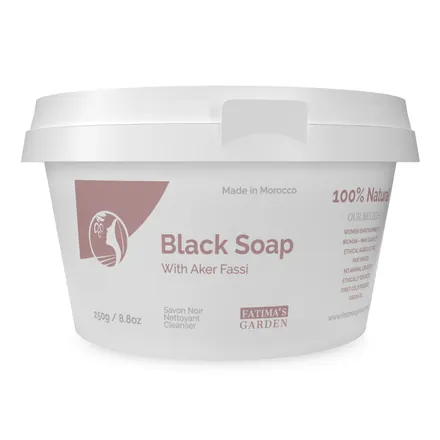 With aker fassiThe red powder of Fez — poppy flower and pomegranate rind.Choose this one →
Three ingredients, plus one more in the scented versions. Here is the rest of what tells a beldi soap from a dark-coloured shower gel.
| Base | Olea Europaea — olive oil and macerated olives |
|---|---|
| Saponified with | Potash (potassium) |
| Residual potassium hydroxide | none |
| Form | Soft paste, not a bar |
| Colour | Dark green to near-black |
| Shelf life | 3 years |
| INCI name | Potassium Olivate, Olea Europaea Fruit |
It is a paste you can lift with a spoon, not a gel you can pour. It smells of olives before it smells of anything else. It barely foams. And the ingredient list is three lines long — if it runs to fifteen, with sulfates and a preservative among them, what you have is a shower gel dyed dark.
The lid closed, out of the shower spray. Water getting into the jar is the only thing that shortens its life. Take it out with a dry hand or a spoon, not with wet fingers.
Six formulas, from 150 g to a kilo. Shipped worldwide with duties paid, so the price you see is the price you pay.
A hammam is a sequence, not a shelf of products. These three are what the soap leads to, in order.
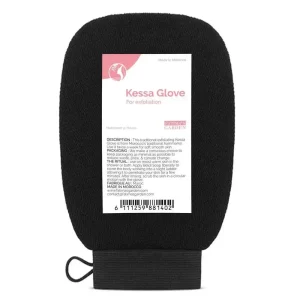 Kessa gloveThe soap softens, the glove is what actually takes off. One does very little without the other.from $16.20
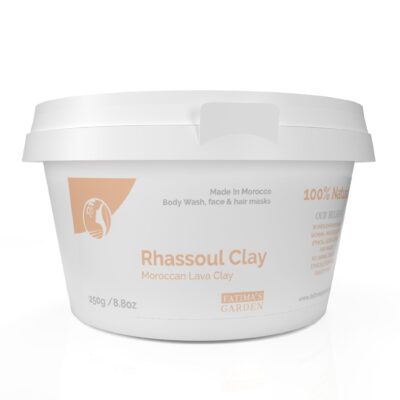 Ghassoul clayIt comes after the glove — soap, scrub, then clay, in that order, on skin that is finally clean.from $21.60
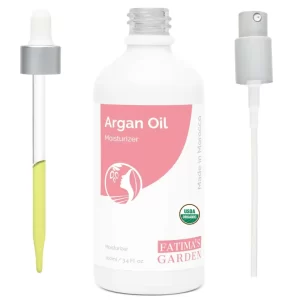 Argan oilThe last step, and the one people forget. On damp skin, straight out of the steam.from $21.60