The blue of the Moroccan hammam
Ground indigo leaf, the same plant that dyes denim. It does not scrub and it does not cleanse: it lays down colour. That is why it is always diluted, why it is rinsed off after twenty minutes, and why it will stain the towel you were careless with.
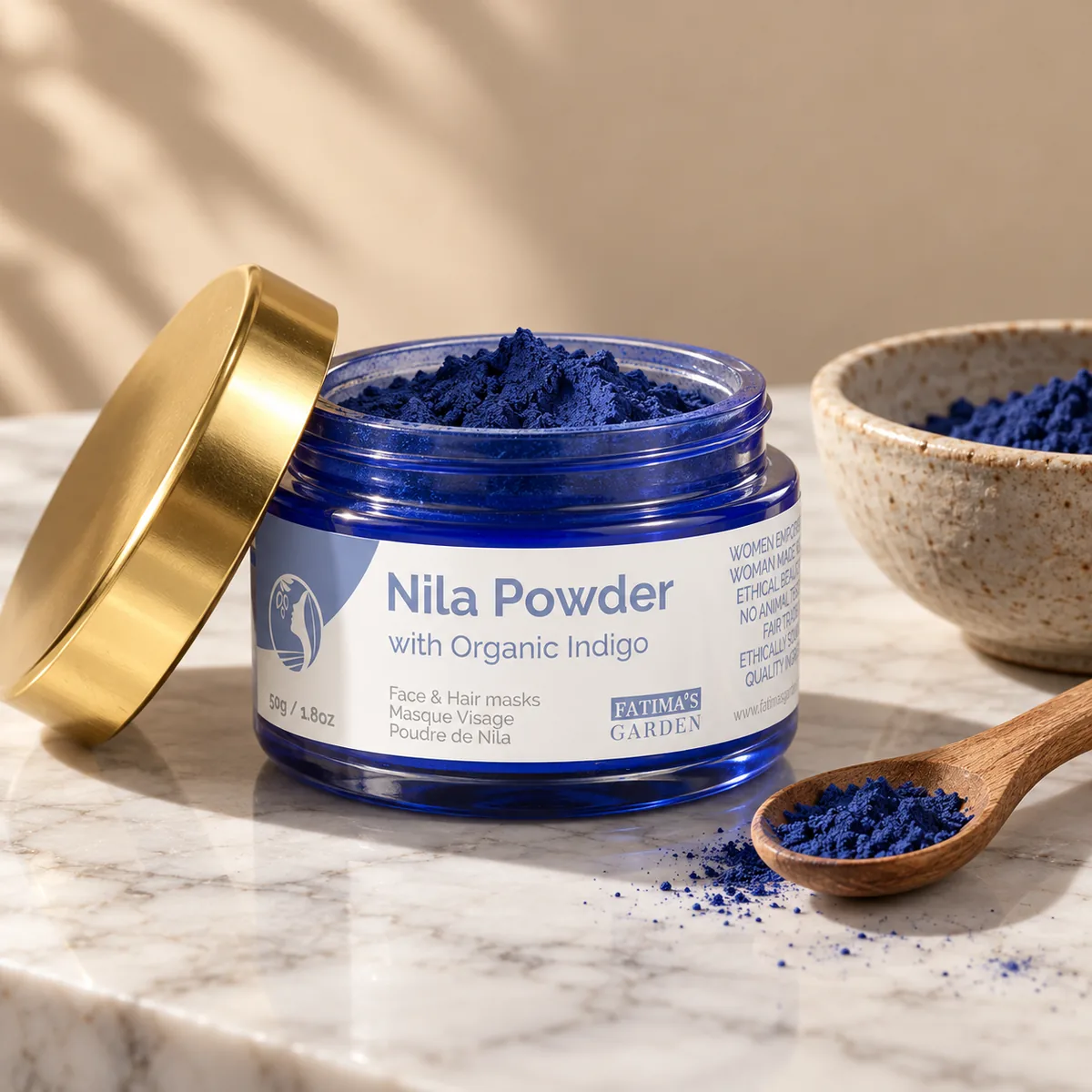
Nila is Indigofera tinctoria, the indigo plant, dried and ground to a powder. It reaches Morocco along the same routes it has for centuries, and it is used in the hammam the way it is used on cloth: for the colour, and for the feel of it going on cool.
It is worth being clear about what it does not do, because a lot is claimed for it. It does not exfoliate — that is the kessa glove and the tabrima powder, which have texture; nila has none. It does not cleanse — that is the black soap. And it is not a treatment for anything. It is a pigment, sold as a pigment.
Plain about what it does. Nila is a cosmetic colouring powder. It does not heal, lighten or repair skin, and it is not a remedy for any condition. Always dilute it, always keep it away from the eyes, and try a little on the inside of the forearm before the first full use. If your skin is giving you trouble, ask a doctor rather than a powder.
Five per cent is the working proportion — roughly half a tablespoon of powder into a small bowl of oil, yoghurt or wet clay. That is not caution for its own sake. Dry pigment on damp skin goes on unevenly, dries in patches, and comes off in patches; suspended in something fatty it spreads thin and rinses out whole.
It also explains the gloves. Indigo binds to keratin, which is what skin, hair and nails are made of, and to cotton, and to grout. Diluted it rinses; neat it settles into every dry patch and every cuticle and stays there a day or two. Nothing is wrong when that happens, but nobody enjoys it.
And it is why the utensils matter: wood, glass or ceramic. Metal reacts with indigo and dulls the colour before it ever reaches the skin.
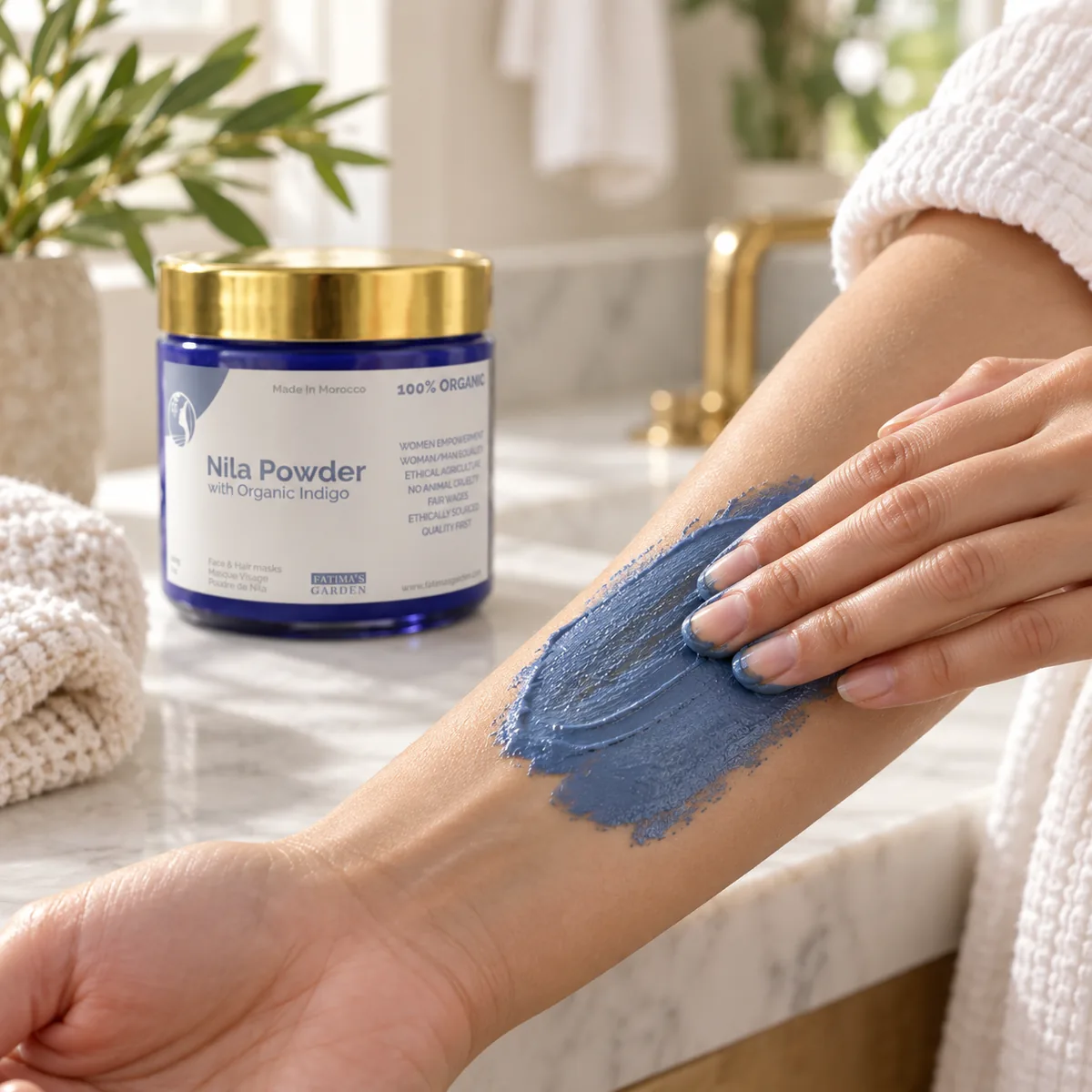
Ours, and the proportions are exact. For the body, keep the same half tablespoon of nila and swap the coconut oil and aloe for one tablespoon of argan oil and one of plain yoghurt.
Half a tablespoon of nilaInto a glass or ceramic bowl — not metal. Add one tablespoon of coconut oil and half a tablespoon of aloe vera gel.
Mix to a smooth creamWith a wooden spoon. It should be spreadable, not runny. Mix it fresh: it does not keep once wet.
Test a small area firstInside the forearm. This is a pigment, and pigments find the one patch of dry skin you had forgotten about.
On damp skin, fifteen to twenty minutesNo longer. Twenty-five minutes is the outside limit and there is nothing to gain past it.
Rinse with warm, soapy waterSoap, not water alone — water alone leaves a blue cast. Keep it away from the eyes throughout.
All four come down to the same fact: you are handling a dye. Treat it like one and it behaves.
Clothes, towels, worktops, nails, grout. Wear gloves, put a towel down you do not mind, and keep it off anything porous.
Nila is diluted, never used neat. Half a tablespoon in a small bowl of oil or yoghurt is the proportion, and more does not work better.
Not metal. Mix and apply with wooden or plastic utensils, in a glass or ceramic bowl.
Then rinse. Leaving it on longer deposits more colour, not more of anything else.
One line, and then the numbers that matter when you actually use it.
| Ingredients | Indigofera Tinctoria leaf powder |
|---|---|
| What it is | A plant pigment — the same indigo that dyes cloth |
| Colour | Deep blue. It will look blue on the skin while it is on |
| Dilution | 5% maximum, always mixed into oil, yoghurt or clay |
| Contact time | 15 to 25 minutes, then rinsed with warm soapy water |
| Shelf life | 5 years, dry and closed |
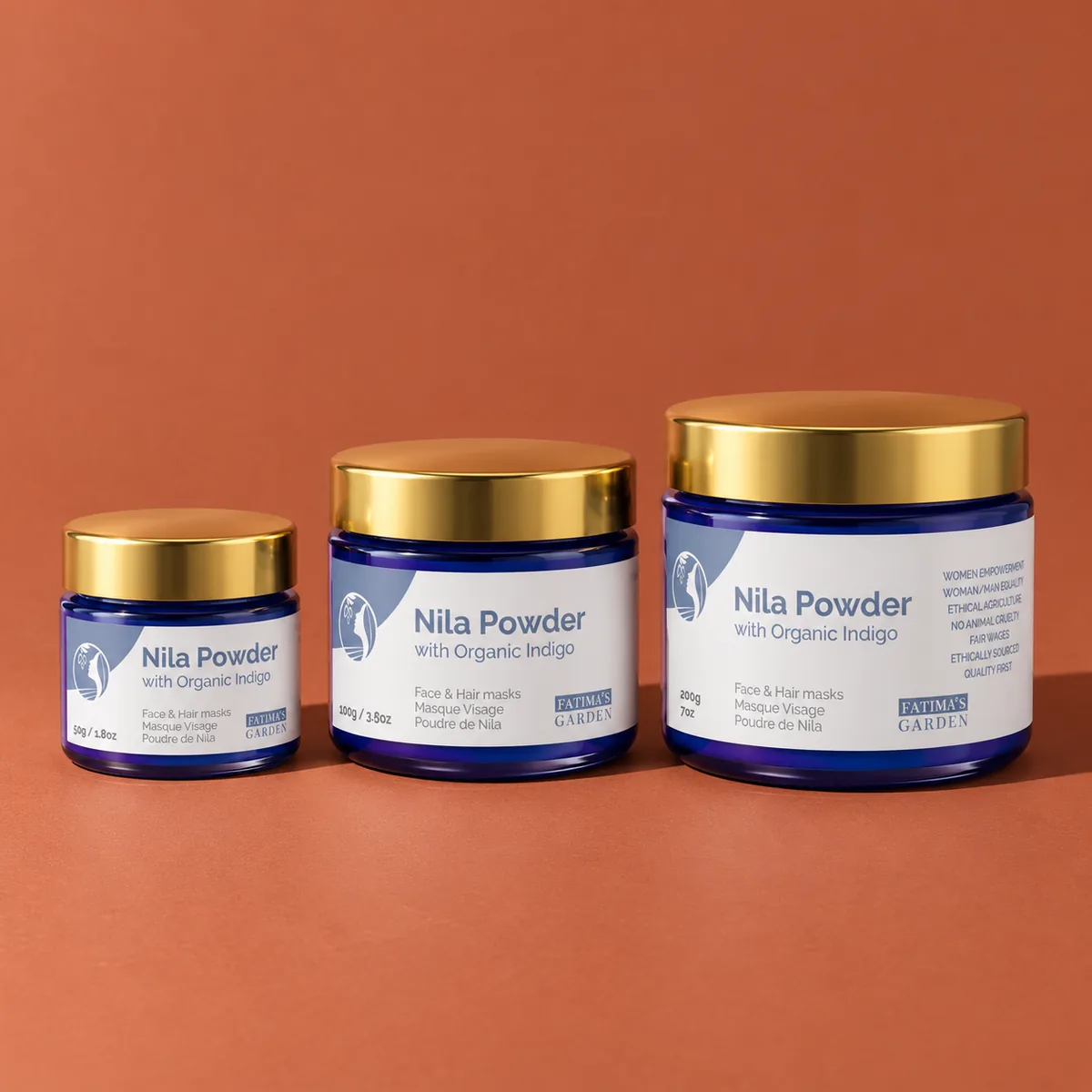
| Packaging | Transparent plastic jar with an aluminium cap |
The ingredient list is one line long. If it runs to several, or names a colour index number, what you have is a blend or a synthetic pigment. Real nila is a plant powder: it smells faintly of hay, and it is never uniform under a lens.
Closed, dry, out of the shower spray, and taken out with a dry spoon. Water in the jar is the only thing that shortens its life. Kept dry it lasts five years.
Nila is rarely used on its own. It is mixed into something, and it comes after something.
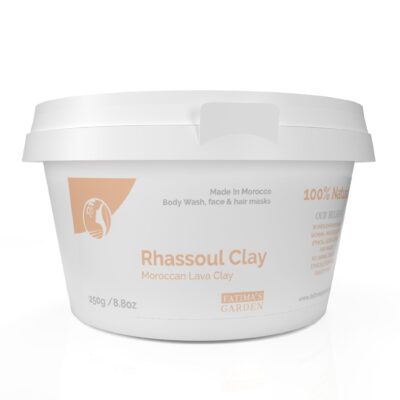 Ghassoul clayThe usual way to use nila on the face: a pinch stirred into the clay, which carries it and rinses away cleanly.from $21.60
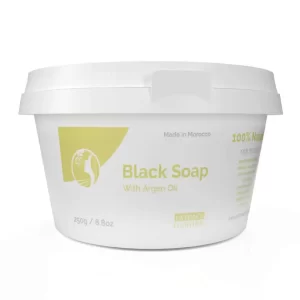 Black soapIt comes first in the hammam. Nila goes on skin that has already been softened and scrubbed, never on skin straight out of the street.from $21.60
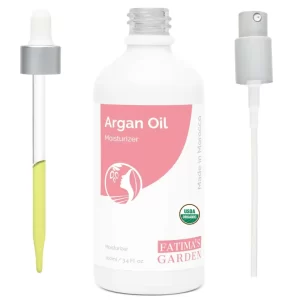 Argan oilWhat we mix the body recipe with, and what goes on afterwards. The powder itself puts nothing back.from $21.60