The tool the hammam is built around
There is no grit in it, nothing coated on, nothing that wears off. It is a glove of 100% viscose, and the crepe weave is the entire mechanism. Put it on dry skin and it does nothing. Put it on skin that has been warm for ten minutes and softened with black soap, and it takes off a layer you did not know was there.
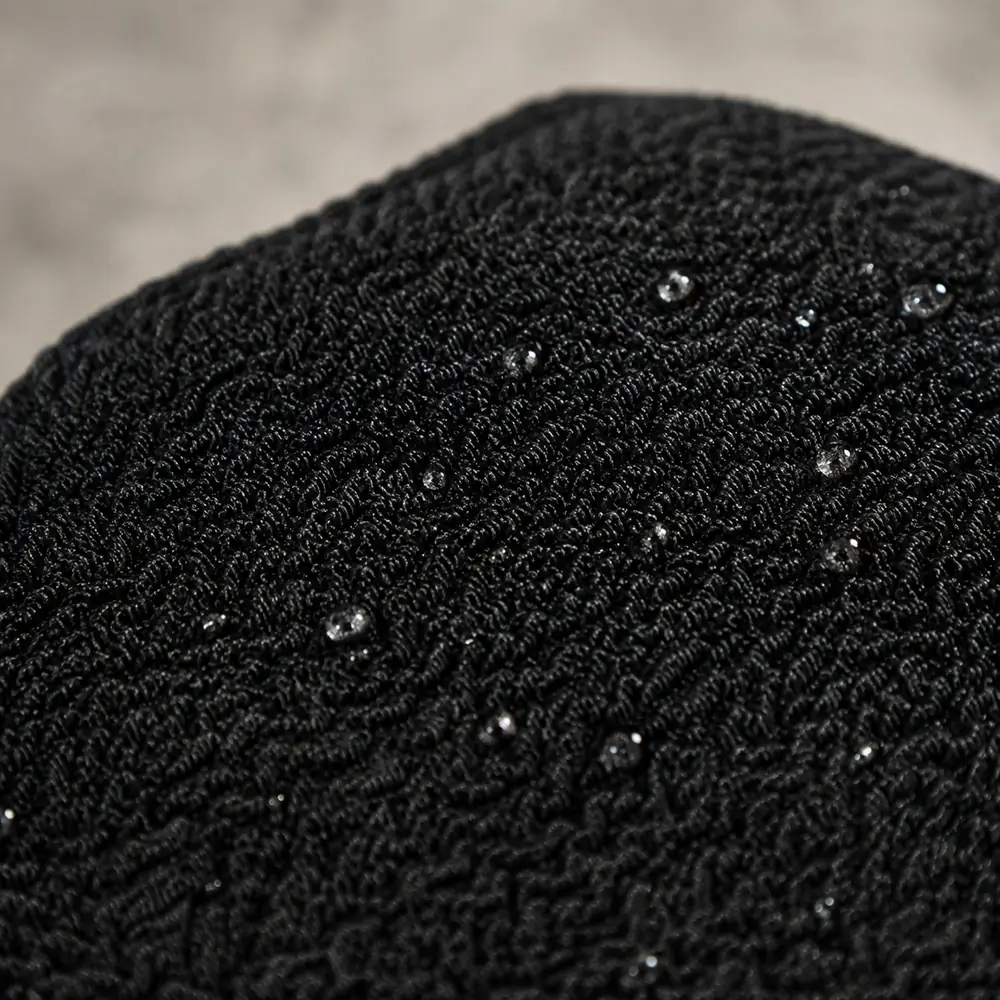
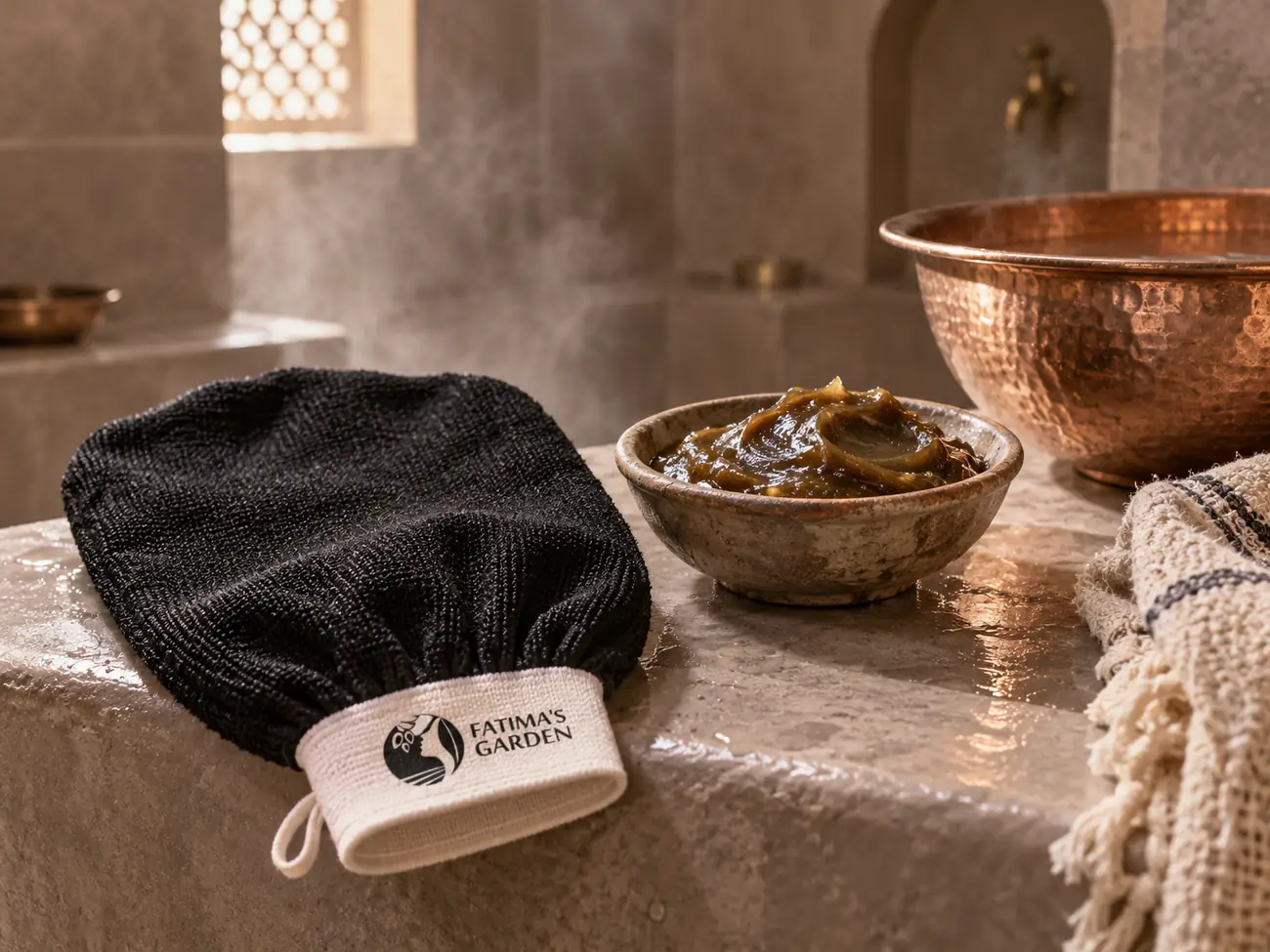
A flat glove, open at the wrist, with a loop sewn into the seam. It feels rough and slightly stiff, a little like raw silk that has been starched. That is correct, and it is the whole product: there is nothing inside it, no sponge, no padding, no grain glued to the surface.
The colour is normally black. Sometimes the weavers have white or beige, and we send what they have — it changes nothing at all about how it works.
Plain about what it does. The kessa glove exfoliates: it lifts the dead cells off the surface of the skin. That is all it does, and it is enough. It is not a treatment, it does not cure anything, and it is not a remedy for any skin condition. If your skin is giving you trouble, ask a doctor rather than a glove. Avoid broken skin, sunburn and the area around the eyes.
A sugar or salt scrub works by dragging hard particles across the skin. The particles are harder than the skin, which is why a scrub used firmly leaves it red, and why the grains break down as you go — strongest at the first stroke, useless by the last.
The kessa does not work that way. The crepe weave gives the fabric thousands of tiny raised loops, all the same height, and they stay the same height from the first stroke to the last. They do not cut into the skin; they catch what is already loose and roll it off. This is why the glove can be used on the face, and why an abrasive scrub of the same strength cannot.
The other half is the heat. The outer layer of the skin is held together by lipids that soften in warmth and humidity — that is what ten minutes of steam does, and it is why the hammam exists. Warm, softened skin gives the layer up easily. Cold, dry skin does not give it up at all, and the same glove that felt gentle now feels like sandpaper.
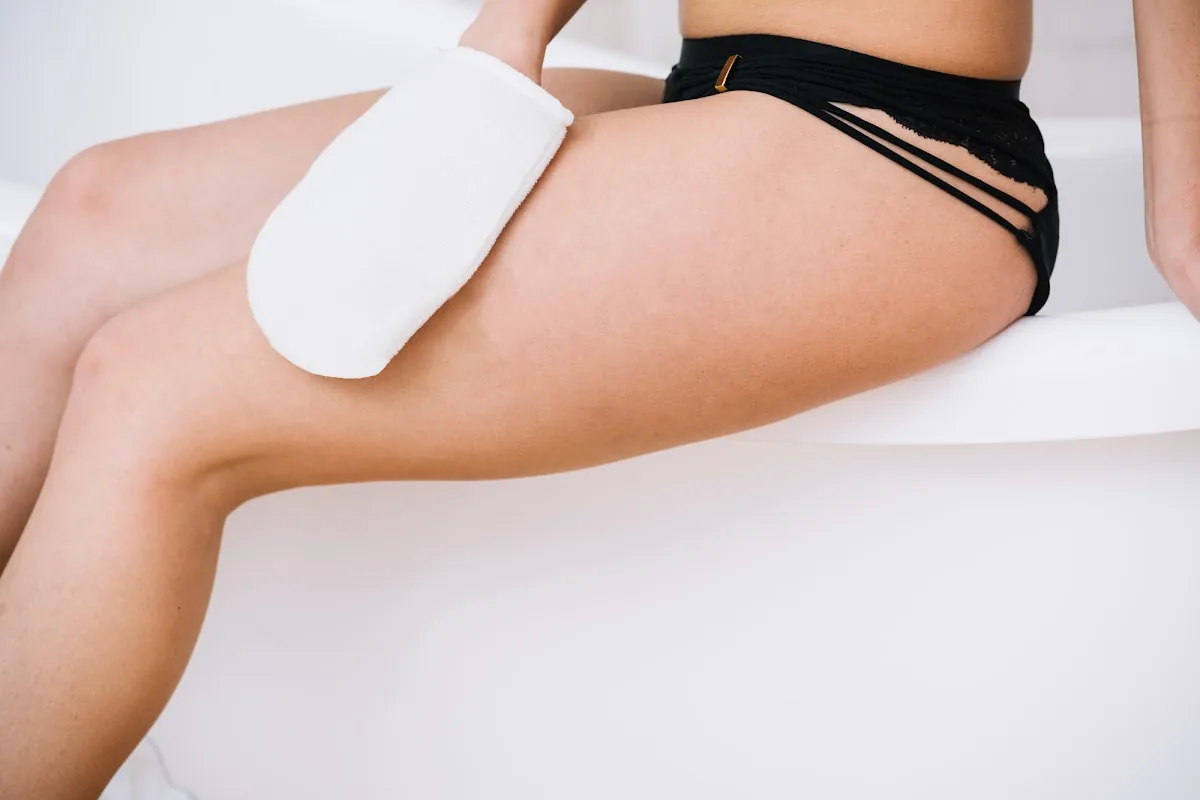
The glove is the third step, and it is the one everyone thinks is the whole thing. It is not: the two steps before it are what make it work, and the one after is what stops it leaving the skin tight.
Get warm, and stay warmTen minutes under a hot shower, or in the steam. This step is not optional and it is the one everyone skips: the glove has almost no effect on skin that has not softened first.
Black soap, then waitA thin film of beldi soap over damp skin. Leave it five to ten minutes. It is doing the work the glove will finish.
Rinse the soap off, then scrubRinse first — scrubbing through the soap just slides. Then work the damp glove over the skin in short back-and-forth strokes, limb by limb. What comes off is startling the first time.
Rinse again, and lookCool water. The skin will be pink and it should feel smooth rather than raw. Pink is normal, stinging is not — that means too hard, or skin that was not warm enough.
Oil, while the skin is still dampA few drops of argan oil on damp skin. Exfoliating without putting anything back leaves the skin tight, and this is the step people regret skipping.
Almost every disappointing first attempt is one of these four, and three of them are the same mistake: hurrying.
The most common one. A dry glove on dry skin scratches and takes off nothing. Everything depends on the ten minutes of warmth before.
Pressure is not what lifts the cells, the weave is. If it stings, you are pressing. Short strokes, light hand, let the fabric do it.
Once or twice a week is the range, and once is plenty for most skin. The dead layer needs that long to build back up. Scrubbed daily, skin goes red and tight instead of smooth.
The face can be done, with a much lighter hand and never around the eyes. Most people find the tabrima powder easier there.
A short list, because there is not much to say — and that is the point of it.
| Material | 100% viscose, in the crepe weave used for hammam gloves |
|---|---|
| What is added | Nothing. No abrasive grain, no coating, no fragrance |
| Size | One size, stretches to fit most hands |
| Colour | Normally black. White or beige depending on what the weavers have |
| Care | Rinse under running water after each use, hang on its loop, let it dry |
| How often | Once or twice a week, less if your skin is sensitive |
| When to replace it | When the weave goes soft and stops catching |
| Origin | Morocco |
It is a flat glove you put your hand inside, not a mitt with a padded back. The texture is the fabric itself — run a thumbnail across it and you feel the weave, not a coating. And it is one piece: no sponge, no plastic mesh, no scrubbing pad sewn on.
The glove has been dermatologically tested. That says it was assessed for skin tolerance, nothing more — it is not a medical claim, and it does not change the two rules that matter: warm skin first, light hand always.
Rinse it under running water straight after use, wring it, and hang it on its loop where air gets to it. A glove left balled up in the corner of the shower goes sour; a glove that dries between uses lasts a year and more. It can go in the machine when it needs it.
The glove is the middle of a sequence. Skip the steps before it and nothing comes off. Skip the one after and the skin feels tight.
 Black soapNot a pairing — the same step. The soap softens, the glove is what actually takes off. One does very little without the other.from $21.60
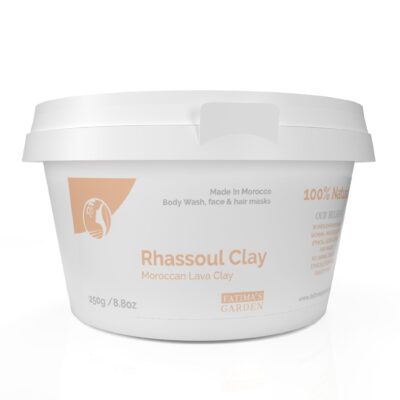 Ghassoul clayIt comes after the glove — soap, scrub, then the clay mask on skin that is finally clean.from $21.60
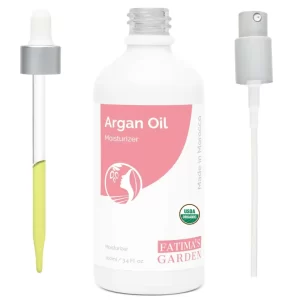 Argan oilThe fifth step of the ritual above, and the one people forget. Skin that has just been exfoliated takes it in differently.from $21.60