Certified organic — Ecocert, EU and USDA
One ingredient, pressed once, from nuts cracked by hand in the Souss valley. Nothing is added to it, and nothing is taken out. It is the oil we started with, and the one we are still judged on.
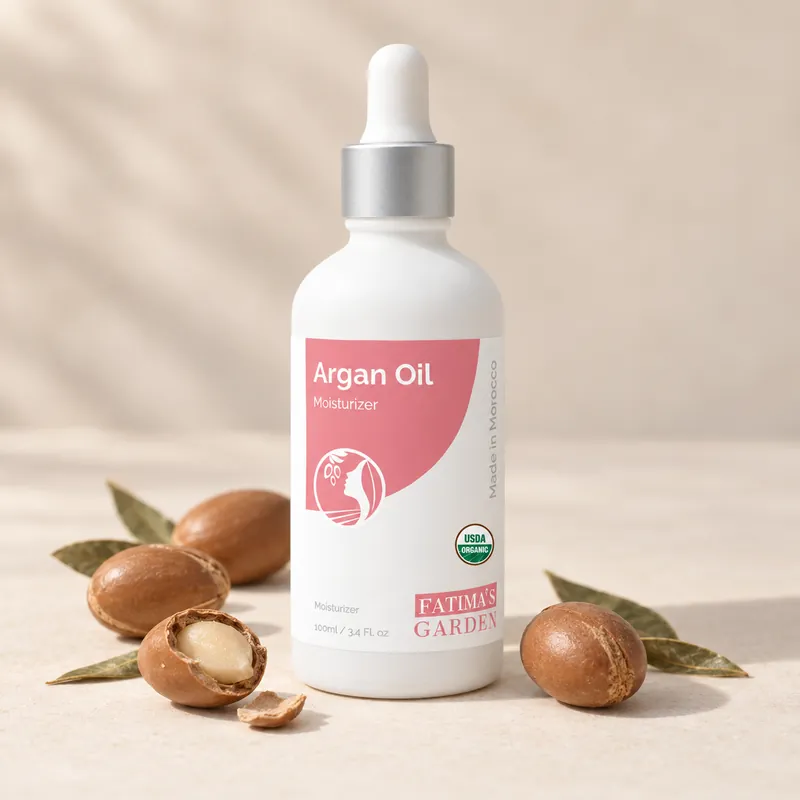
The argan tree grows in one place on earth: the south-west of Morocco, between Essaouira and the Anti-Atlas. It is not farmed anywhere else, and it has never been successfully transplanted. That is the whole reason the oil is rare.
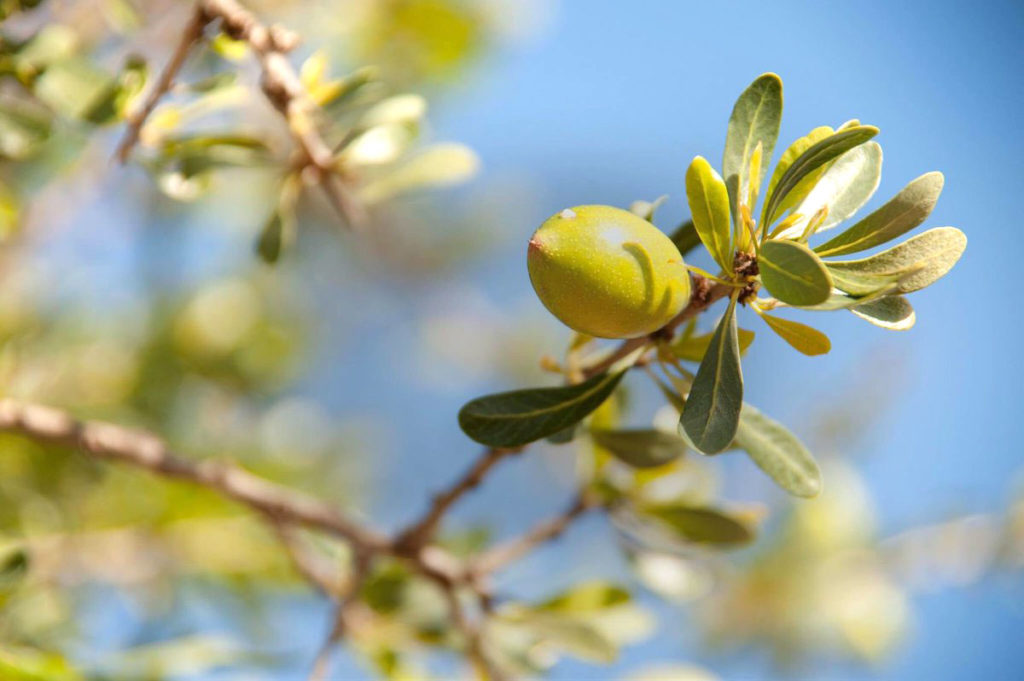
Each nut has to be cracked between two stones, by hand, to reach the kernels inside. No machine has replaced that step. It takes several hours of work to fill a single bottle, which is why the oil has always been expensive, and why it is so often cut with something cheaper.
Ours is pressed once, cold, and filtered. That is the entire process.
Argan oil is roughly 80 % unsaturated fatty acids, and about a third of that is linoleic acid — the one the skin uses to build its own barrier. That is the honest mechanism behind what people notice: skin that holds its water better, and feels less tight.
It is light. It sinks in within a minute or two and leaves no film, which is why it suits faces as well as it suits hands, and why it can be used on skin that is already oily.
Thirty postmenopausal women applied 240 mg of argan oil nightly for two months. The study measured a significant fall in water loss through the skin and a significant rise in the water content of the epidermis.
Boucetta KQ et al., “Does argan oil have a moisturizing effect on the skin of postmenopausal women?”, Skin Research and Technology, 2013;19(3):356–7. Read the study
Sixty postmenopausal women, over sixty days, in a controlled trial against olive oil. Both the daily application and the daily consumption of argan oil produced a significant improvement in the elasticity of the skin.
Boucetta KQ et al., “The effect of dietary and/or cosmetic argan oil on postmenopausal skin elasticity”, Clinical Interventions in Aging, 2015;10:339–49. Read the study
Extra-virgin argan oil carries 600 to 900 mg of tocopherols per kilo — about twice what olive oil carries, and mostly in the gamma form. That is what makes it keep, and what makes it worth pressing cold.
Mechqoq H et al., “Argan oil: chemical composition, extraction process and quality control”, Frontiers in Nutrition, 2021;8:804587. Read the study
What these studies do not say. They measured hydration and elasticity in healthy skin. Argan oil is a cosmetic, not a treatment: if you have a diagnosed skin condition, ask your doctor before adding any oil to your routine. As with any new product, try a little on the inside of the forearm first.
Two or three drops is the whole dose. More does not work better — it just sits on the surface.
Two or three drops, warmed between the palms, pressed onto damp skin at night. It absorbs without leaving a film.
One drop, tapped gently with the ring finger. For the eye area specifically, prickly pear seed oil is lighter still.
A few drops on the lengths after washing, or massaged into the scalp and left an hour before shampooing.
A drop worked into the cuticles. This is the use people come back to without being told.
On rough heels, at night, under a cotton sock.
On dry patches, on the belly during pregnancy, after the shower while the skin is still damp.
We publish the analysis because almost nobody does, and because it is the only way to tell a real argan oil from a diluted one.
| Oleic acid (omega-9) | 43 – 49 % |
|---|---|
| Linoleic acid (omega-6) | 29 – 36 % |
| Palmitic acid | 11.5 – 15 % |
| Stearic acid | 4.3 – 7.2 % |
| Colour | Golden to light amber |
|---|---|
| Odour | Discreet, nutty, fades within minutes |
| Saponification value | 190 – 199 |
| Peroxide value | under 15 |
| Iodine value | 90 – 110 |
| INCI name | Argania Spinosa Kernel Oil |
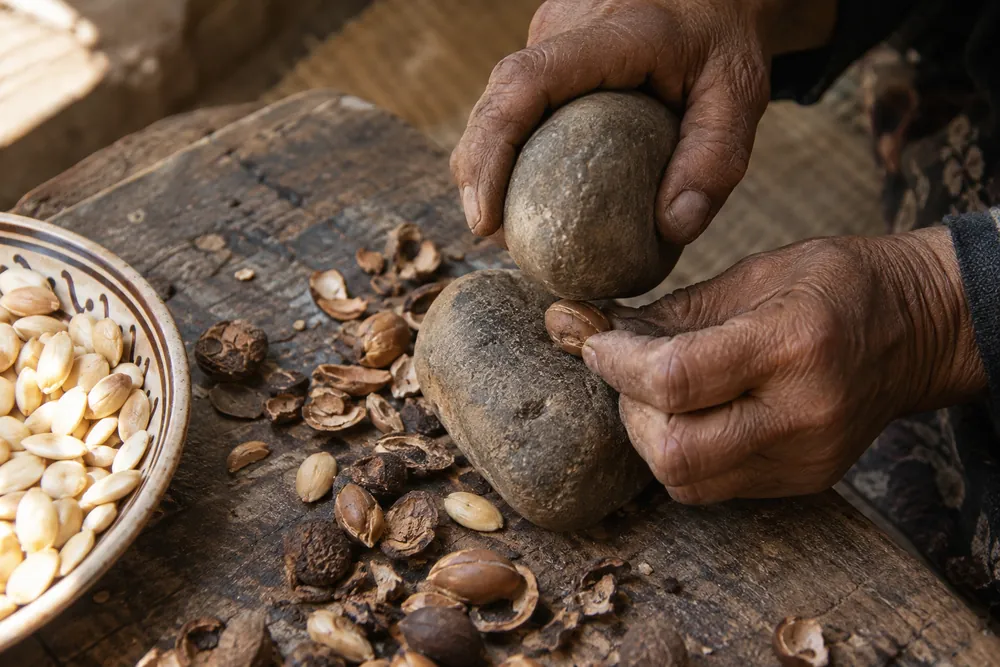
The nuts are hand-harvested from the best trees of the region, and cracked by hand. The kernels are pressed once — one pressing only, to take the freshest part of the oil and nothing else. The oil is never refined, never deodorised, never blended.
It is certified organic by Ecocert, under the European organic regulation and the USDA National Organic Program. Both certificates are on our certifications page, with the links to check them yourself.
Long before it was a cosmetic, argan oil was food. Roasted kernels give a darker, nuttier oil that Moroccan families serve with bread, couscous and tagines, and that some European kitchens have since adopted.
We press the cosmetic oil from unroasted kernels, which is a different product entirely. If you are looking for the culinary one, write to us — we can point you to it, though we no longer keep it in the shop.
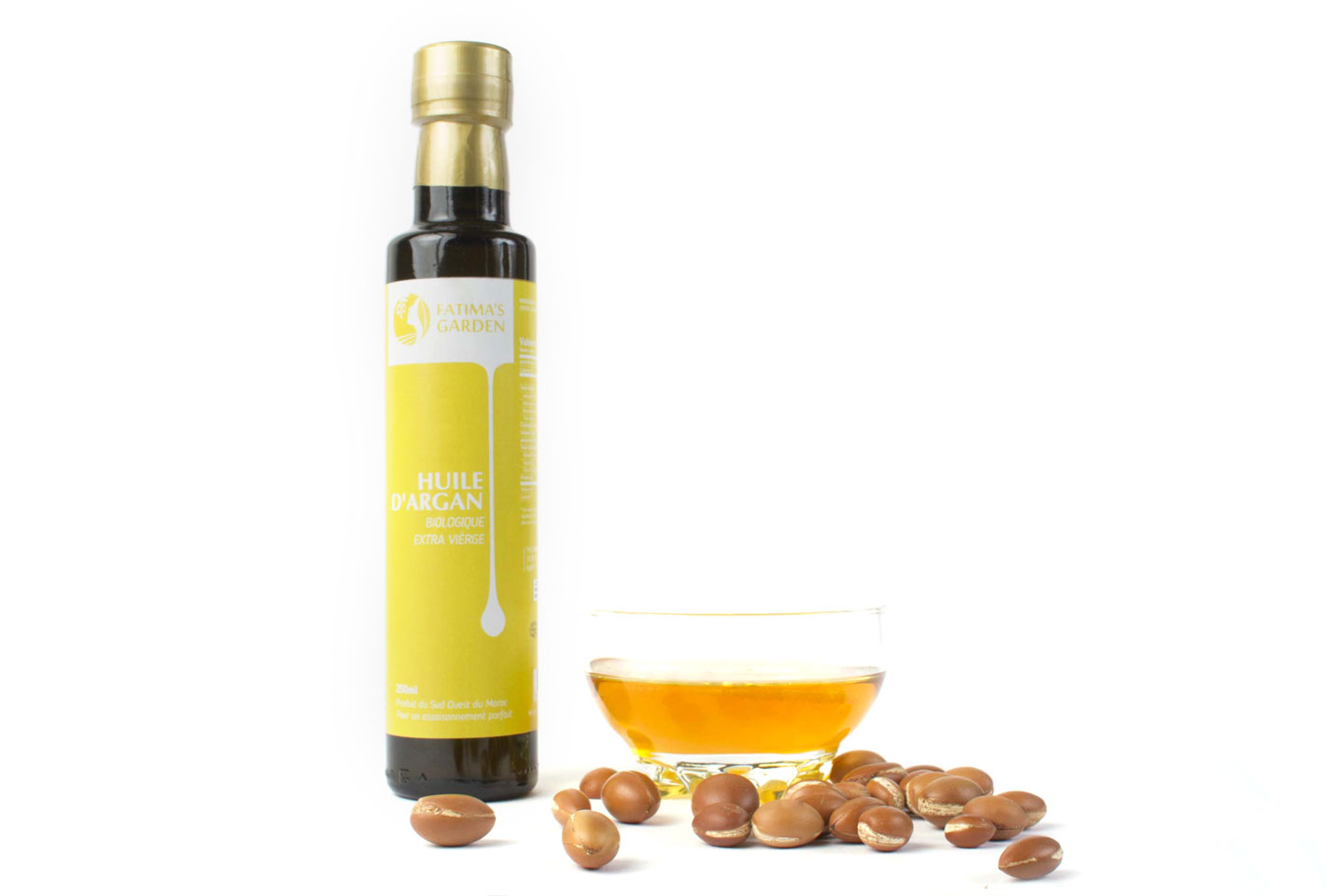
30 ml, 50 ml and 100 ml, in reusable glass. Shipped worldwide with duties paid, so the price you see is the price you pay.
Not a list of everything we make — the three products argan buyers actually put in the same basket. Nearly a quarter of them add the prickly pear, and we sell the two together as The Two Oils.
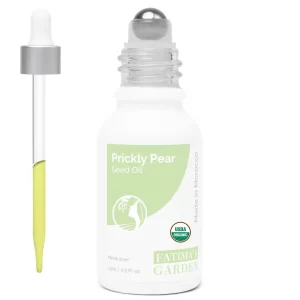 Prickly pear seed oilThe one people buy with it most often — nearly a quarter of argan orders. Richer, and one of the highest plant oils in vitamin E: argan for the day, this one for the night.from $39.98
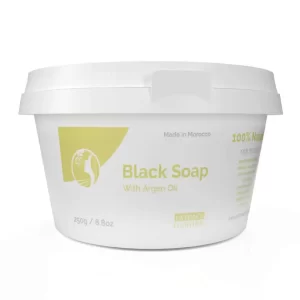 Black soapWhere the hammam starts. An olive paste, not a bar — you spread it, let it sit, then scrub it off. The skin it leaves behind is what the oil is for.from $21.60
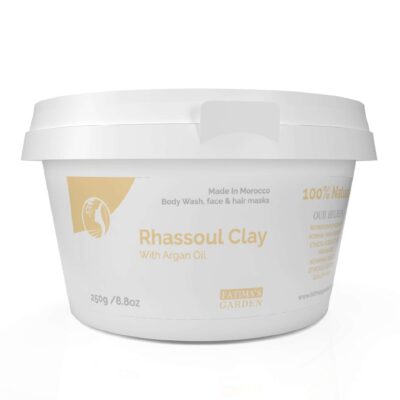 Ghassoul clayMineral clay from the Middle Atlas, for hair and face. It lifts oil rather than stripping it, which is why it pairs with an oil instead of fighting it.from $21.60