
Description
Henna is a leaf, ground fine
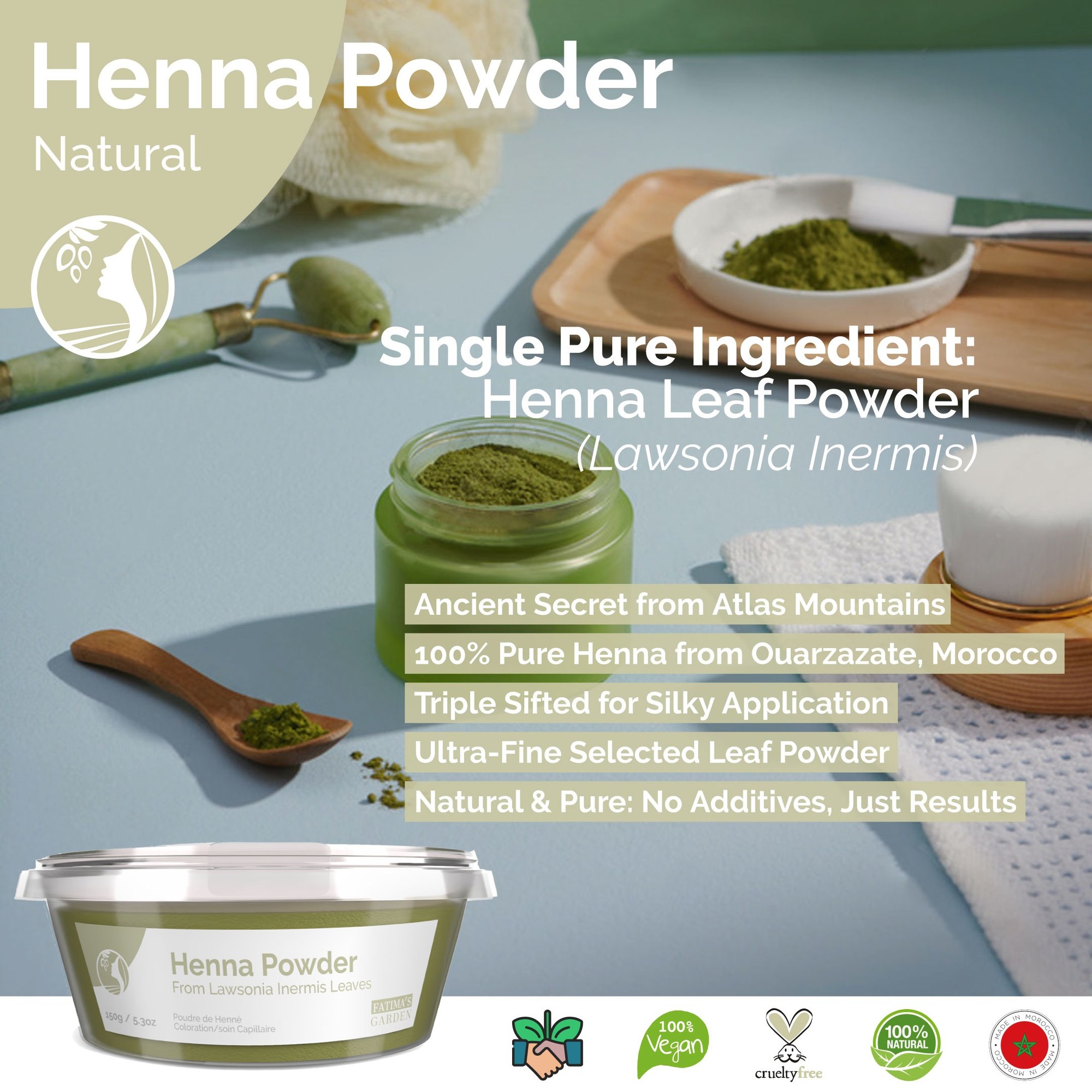
Henna is the leaf of Lawsonia inermis, a shrub that has coloured hair around the Mediterranean and in North Africa for centuries. Ours is Moroccan. The leaves are dried, ground and sifted into a fine, green-brown powder that smells of hay and dry leaves.
The colour comes from lawsone, an orange-red pigment held in the leaf. Once the powder is wet, lawsone binds to keratin, the protein hair is made of. That is why henna colours hair, and why it also marks skin, nails, towels and grout. It does not wash out: it fades a little over the first weeks, then grows out with the roots.
What it does to hair
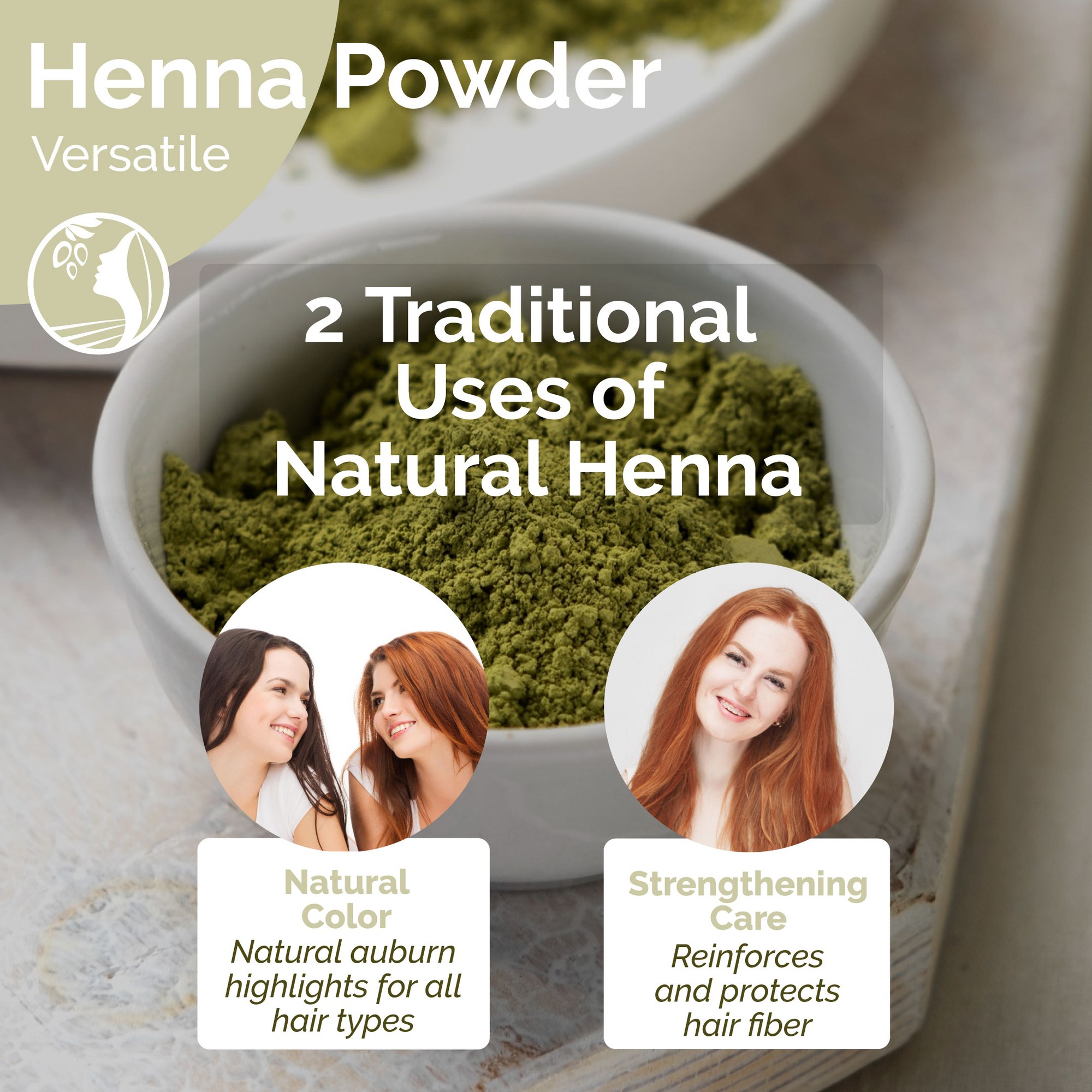
Two things, in the same application. It colours: henna lays copper to red-brown tones over your natural shade. It cannot lighten, so the result depends on where you start. And it coats the hair: after rinsing, hair feels thicker and has more body.
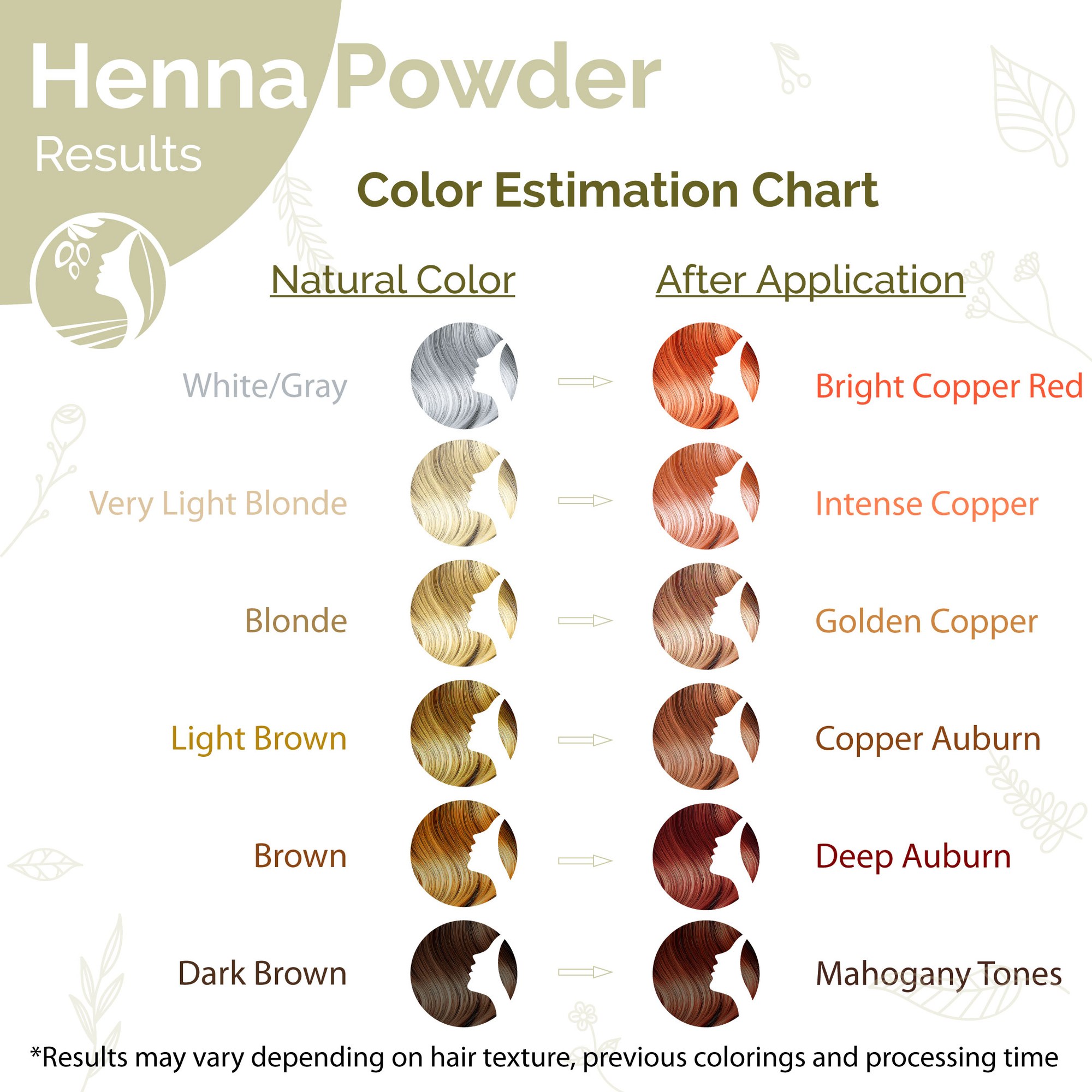
| Your natural shade | After henna |
|---|---|
| White or grey | Bright copper red |
| Very light blonde | Intense copper |
| Blonde | Golden copper |
| Light brown | Copper auburn |
| Brown | Deep auburn |
| Dark brown | Mahogany tones, most visible in daylight |
Results vary with the texture of your hair, any previous colouring and how long you leave the paste on.
How to use it
For colour
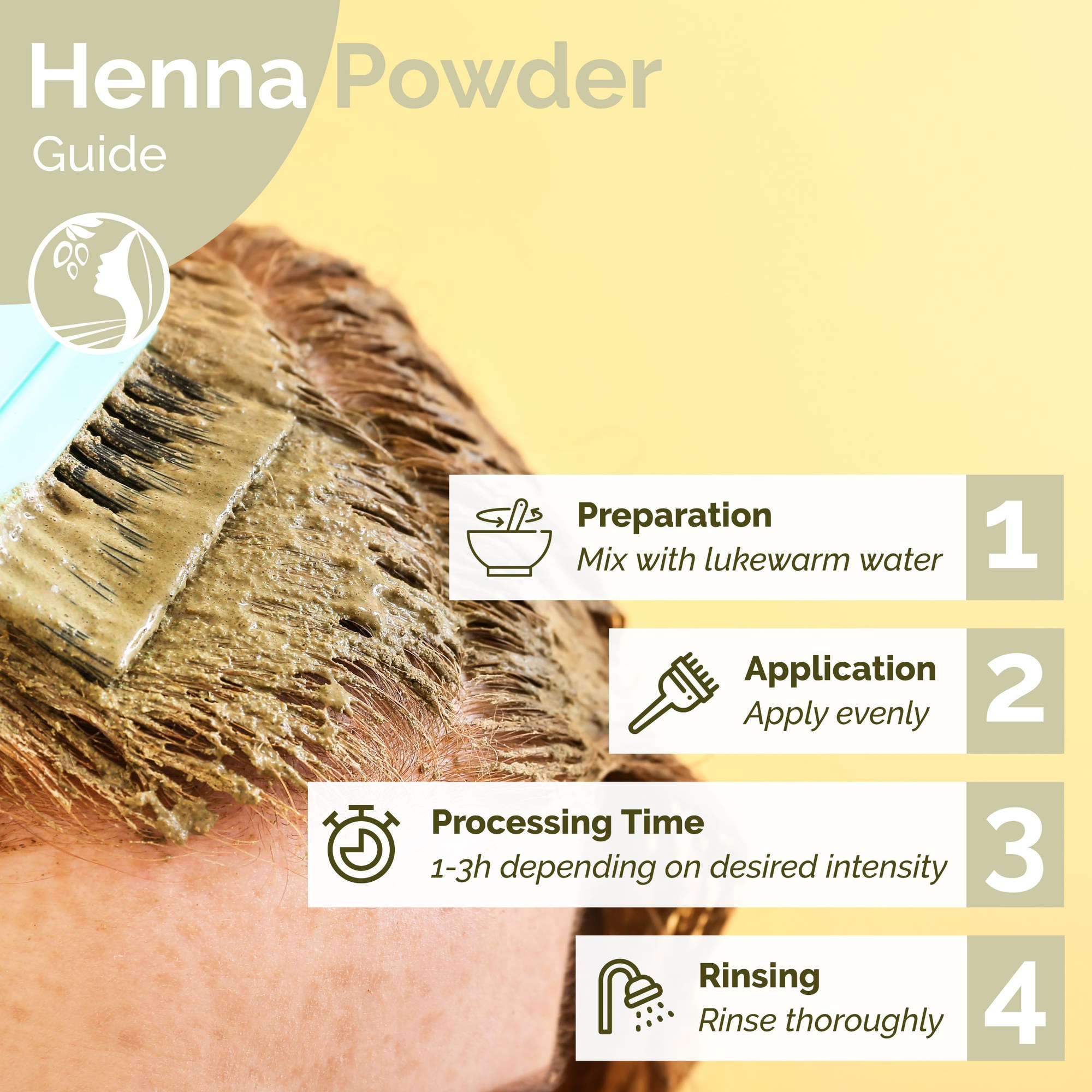
- One part powder to three parts lukewarm water, in a glass, ceramic or wooden bowl, never metal. About 100 g of powder for shoulder-length hair, less for short hair, more for long hair.
- Stir to a smooth paste, about as thick as yoghurt.
- With gloves on, apply it to clean, unconditioned hair, section by section, from the roots to the ends.
- Leave it on for one to three hours, depending on how deep you want the colour.
- Rinse with plenty of water until it runs clear.
- The colour keeps deepening for one to two days after rinsing.
As a conditioning mask
- The same paste, or the powder mixed with plain yoghurt or a beaten egg instead of water.
- Thirty minutes on clean hair, then rinse well.
- Even a short application leaves a light copper tint, most visible on blonde and grey hair.
Four things to get right
- Test first. A skin test 48 hours before each use, inside the elbow or behind the ear. And a strand test on a hidden lock if your hair is grey, bleached or chemically coloured: that is where results differ most.
- It stains, and that is the point. Skin, nails, towels and grout. Wear gloves, put an old towel round your shoulders, and smooth a little argan oil along the hairline.
- Glass, ceramic or wood. Mix and store the paste in a non-metallic bowl.
- It only adds colour. Henna will not take hair lighter, and going lighter later is difficult. Chemical colour or bleach applied over henna can behave unpredictably: test a strand first, and tell your hairdresser that you use henna.
Plain about what it is
This is a hair product, sold to colour and condition the hair. It is not for the skin, for body art, or for eyebrows and eyelashes. The “black henna” offered for temporary tattoos is something else: it is darkened with PPD, a synthetic dye that can cause severe allergic reactions. The ingredient list on this jar is one line long: Lawsonia Inermis Leaf Powder.
Precautions
- Do a skin test 48 hours before each use. If you notice itching, redness or swelling, do not use the product.
- For external use on the hair only. Keep away from the eyes; if paste gets in, rinse at once with plenty of water.
- Do not apply to an irritated or damaged scalp.
- Avoid breathing in the powder: open the jar and mix gently.
- Not for children under three. Keep out of the reach of children.
- Store closed, in a cool, dry place, and use within 12 months of opening.
How to tell a real one
Henna powder is green to green-brown and smells of hay. If it is black, if it promises a black result on its own, or if the ingredient list runs to several lines or names a colour index number, what you have is a blend or a synthetic dye.
Questions we are asked
Will henna cover grey hair?
It colours grey and white hair, in copper to red tones; it will not make it brown or black. Grey takes the colour more slowly than the rest of the hair, so two applications a few days apart give a more even result.
How long does the colour last?
On the hair you colour, it is permanent: it softens slightly over the first weeks and grows out with the roots. Most people go back to the roots every four to six weeks.
Can I use it on coloured or bleached hair?
Henna adds its tone over what is already there, so test a strand first and wait two days to judge it. The other way round, chemical colour, bleach or a perm over henna, is where problems happen: tell your hairdresser.
Can I use it for body art or mehndi?
No. This henna is sold and assessed for hair only.
Why does my hair look orange just after rinsing?
The colour is still developing. In contact with air it deepens and warms over one to two days.
Which size should I choose?
The 150 g jar is enough to try it on short hair or for a few root touch-ups. For shoulder-length hair, count about 100 g per application. The 500 g tub costs least per gram.
Where it fits
Wash your hair beforehand without conditioner, so the paste reaches the hair evenly; our ghassoul clay is a traditional way to do it. Afterwards, a few drops of argan oil on the lengths.


Reviews
There are no reviews yet.