The red of Fez
Poppy petals and pomegranate peel, dried and ground together. Dry, it does nothing at all. It takes water — and how many drops you add is what decides whether it goes on your lips, on your cheeks, into a clay mask or into a henna.
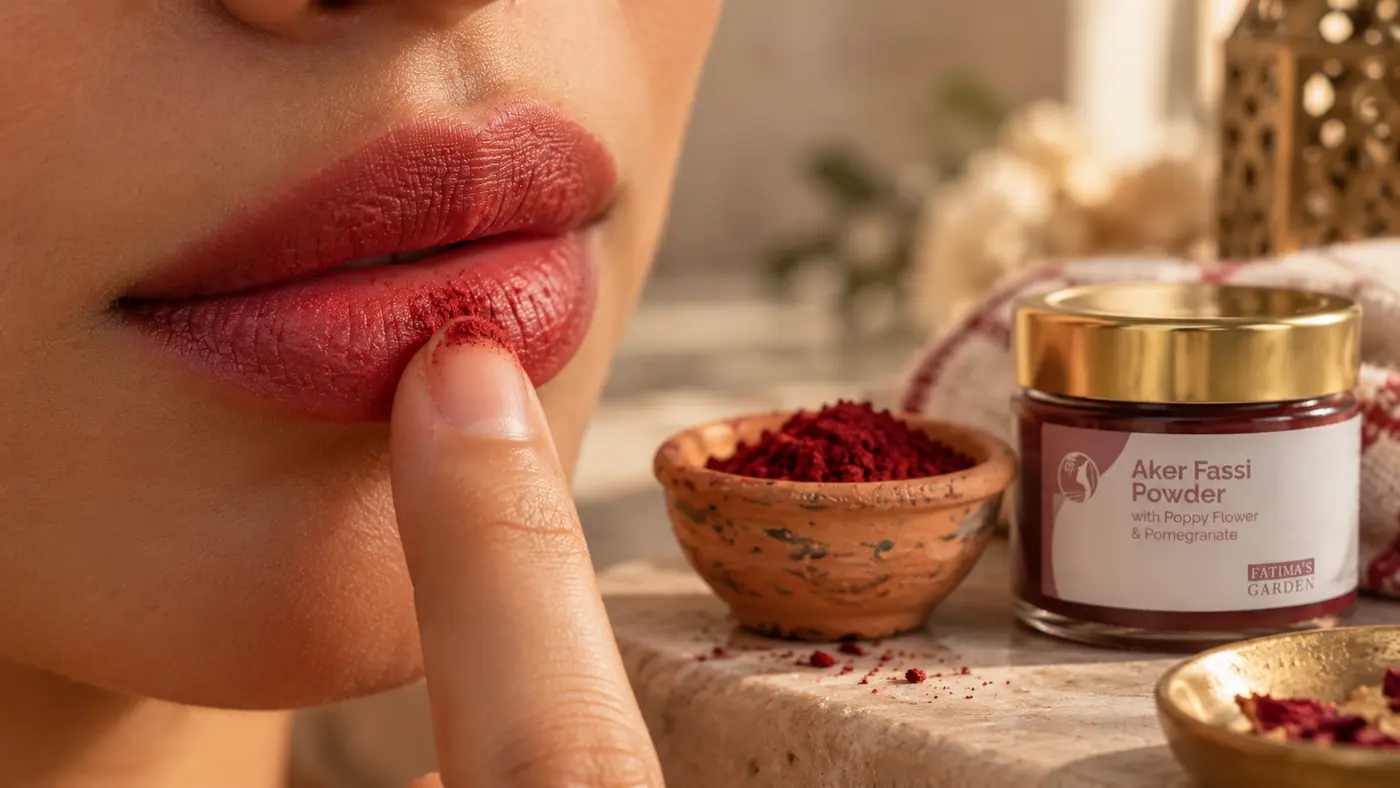
Eighty-five parts dried poppy petal — Papaver rhoeas, the red poppy of the fields — to fifteen parts pomegranate peel, Punica granatum. Ground together and pressed into the jar. That is the whole ingredient list, and it is why the powder looks matte and dusty rather than bright: what is in the jar is crushed flower, not a pigment made in a factory.
The name says where it comes from. Fassi means of Fez, and aker fassi is the red Moroccan women have worn for weddings and for ordinary Thursdays for as long as anyone has kept count. It was never sold as a cosmetic with a brand on it. It was sold by weight, in the spice souk, along the same shelf as the saffron.
Plain about what it does. Aker fassi is a colouring powder. It lays down red on the surface of the skin and the lips, and that is all it does — it does not hydrate, it does not treat anything, and being a dry powder it could not. If you want your lips soft under it, put a little oil or balm on first and give it a minute to sink in. It can go on the eyelids, but never in the eye. Try a little on the inside of the forearm before the first full use.
Take a quarter of a tablespoon of powder into the jar cap. Add two or three drops of water and you get a thick paste: that is the lip version. Add four or five to the same quarter tablespoon and it turns fluid: that is the cheek version. Same powder, same quantity, two different products.
It is not arbitrary. Fewer drops means more pigment in the same amount of paste, so it dries faster, it sits where you put it, and it holds the six to eight hours — which is what a lip needs, since you are going to press it together and eat with it. More drops means it spreads and disappears into the skin instead of sitting on top of it, which is what a cheek needs; a thick paste there would stay as a visible disc.
Which is why the cap matters more than it sounds. It holds about a quarter tablespoon, it is the right depth to stir in, and it means the whole thing happens over the jar rather than over a bowl you then have to scrub red.
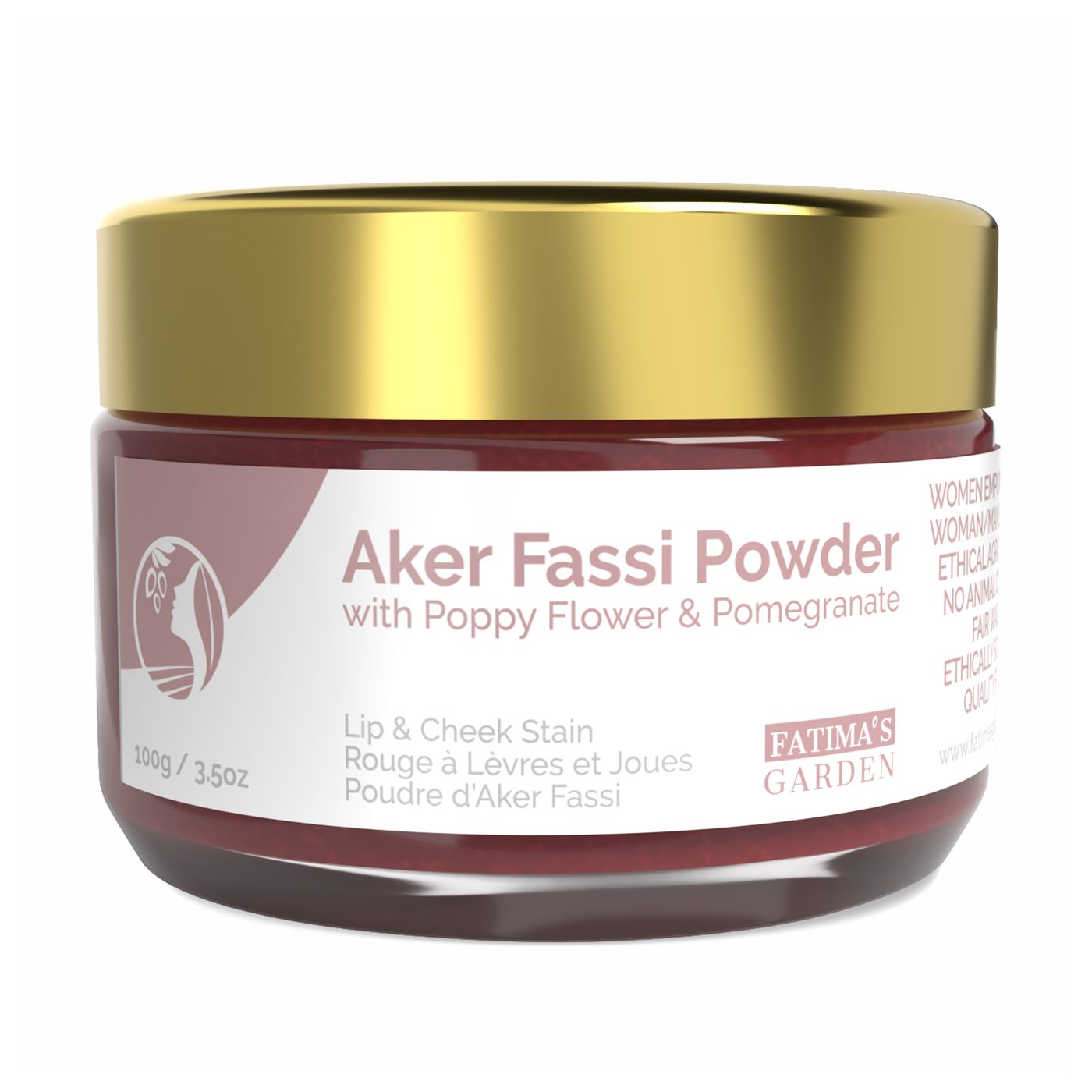
Ours, and the proportions are exact. For the cheeks, keep the same quarter tablespoon and go to four or five drops, then pat it on with a fingertip from the apple of the cheek outwards until you cannot see where it starts.
A quarter tablespoon in the capThe jar cap holds about the right amount and saves washing a bowl. That is how it is done at home, and it is why the mixing happens there.
Two or three drops of rose waterNot four. This is the whole technique: the fewer the drops, the thicker the paste and the longer it holds. Plain water works; rose water is what we use.
Mix to a thick, even pasteStir with the end of a brush until there is no dry powder left. It should hold its shape — closer to lipstick than to ink.
Paint it on with a brush or a cotton swabStart at the centre of the lip and work outwards. One coat is usually enough; a second goes on once the first has dried.
Give it a minute, then pressIt needs a moment to take. Press the lips together once it is dry, and it will not move for the rest of the day.
Same jar, more water, and it stops being makeup. These are house recipes, with the proportions we use.
One tablespoon of aker fassi, two of rose water, one of ghassoul clay. Mix smooth, spread on clean skin, fifteen minutes, rinse lukewarm. The clay is what draws and cleans here — the aker fassi brings the colour and the scent. Fifteen minutes, not thirty: it does tint.
Ten tablespoons of henna, a quarter tablespoon of aker fassi, lemon juice, boiling water, one egg white. Rest thirty minutes, two hours on the hair, rinse out with conditioner. A quarter into ten is a nuance: it pulls henna’s copper towards red. It is not a hair colour on its own.
Aker fassi is one of the four blends of our tabrima, the hammam exfoliating powder. The same plants, in a mix that has grit to it — which the plain powder has not.
All four follow from one fact: this is a dye that holds. What makes it good on a lip makes it a nuisance on a towel.
Towels, worktops, grout, light clothes. Mix in the cap, keep a cloth beside you, and wipe up as you go rather than after.
It holds through water and through a meal — which is the point, and also why water alone will not take it off at the end of the day. An oil-based cleanser does, in one pass.
Inside the forearm, the day before. Poppy and pomegranate are food plants, but skin is skin and lips are thinner than the rest of you.
Take the powder out with a dry hand or a dry spoon, close it, keep it out of the shower spray. Dry, it lasts five years.
Two lines, and then the numbers that matter once you are standing in front of it with the cap in your hand.
| Ingredients | Papaver Rhoeas (poppy) flower powder 85%, Punica Granatum (pomegranate) peel powder 15% |
|---|---|
| What it is | A dry plant pigment, pressed into the jar |
| Colour | Deep red — darker on the lips, softer on the cheeks |
| Mixing | Per quarter tablespoon: 2–3 drops of water for the lips, 4–5 for the cheeks |
| Wear | 6 to 8 hours with no touch-ups, water and food resistant |
| Where | Lips, cheeks and eyelids, on all skin tones |
| Shelf life | 5 years, dry and closed |
| Packaging | Transparent plastic jar with an aluminium cap, reusable |
| Origin | Morocco |
The ingredient list is two lines long. If it runs to more, or names a colour index number, what you have is a pigment blend. Real aker fassi is crushed flower: it is never perfectly uniform, it smells faintly of dried petals, and the red it gives on skin is never quite the red it looks in the jar.
Closed, dry, out of the shower spray, and taken out with a dry spoon. Water in the jar is the only thing that shortens its life — it turns the powder to a cake that will not mix again. Kept dry it lasts five years.
Something to mix it with, something to take it off, and the clay it goes into.
 Rose waterWhat the powder is mixed with, in every recipe here. Plain water works; rose water is what makes it smell of something.from $21.60
 Makeup removerA stain that holds through a meal does not come off with water. This is the oil that takes it off in one pass, lips and eyelids included.from $21.60
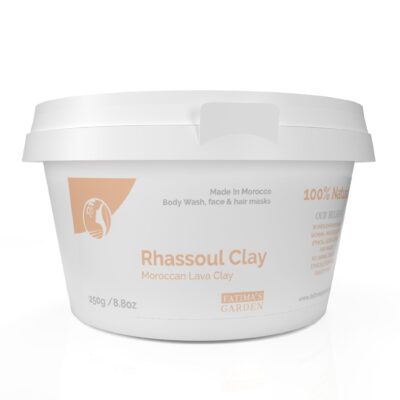 Ghassoul clayThe third ingredient in the face mask, and the one that does the cleaning while the aker fassi does the colour.from $21.60