



Description
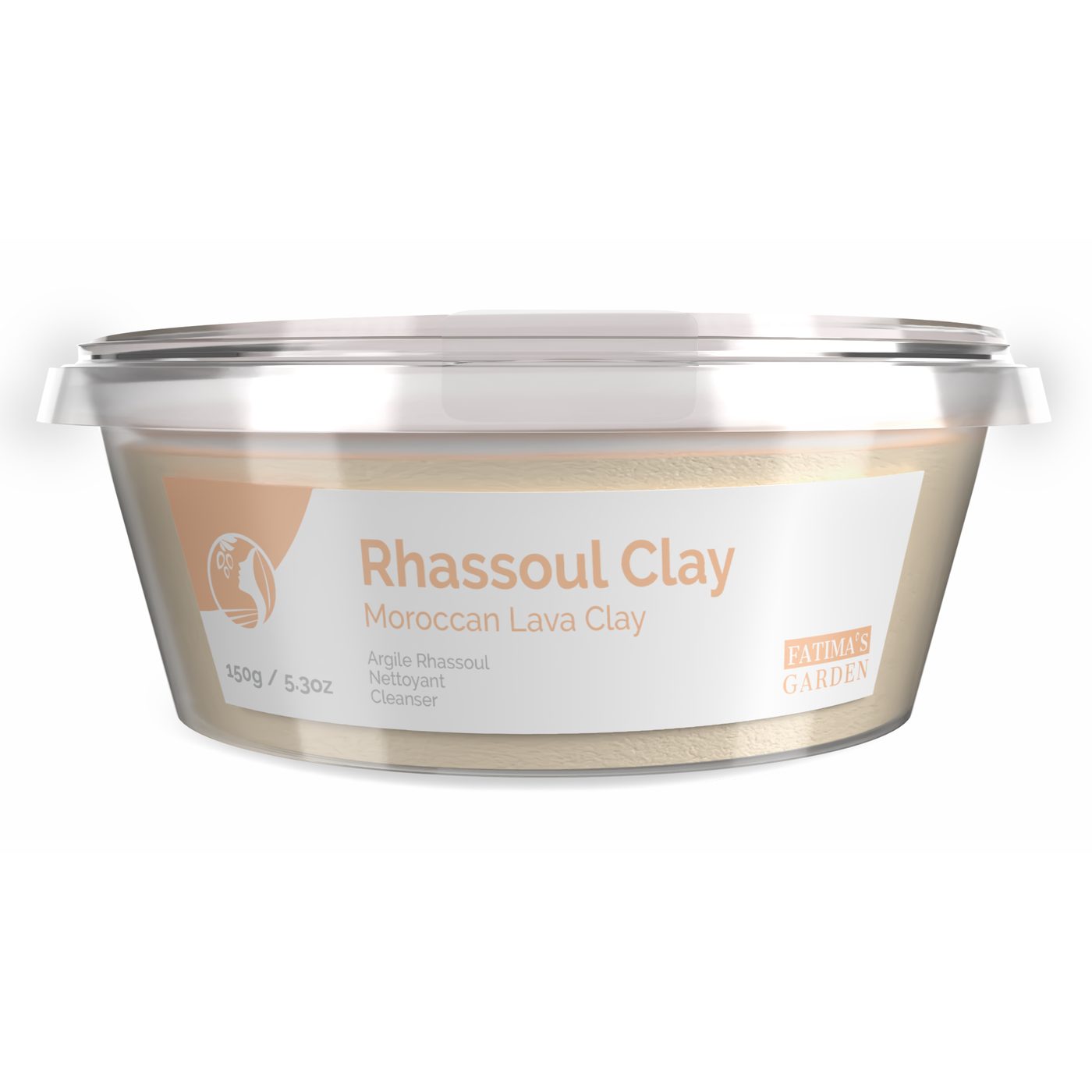
Moroccan ghassoul clay
Ghassoul is a stevensite — a smectite clay, mined in the Moulouya valley on the eastern edge of the Middle Atlas, the only commercial deposit in the world. It is cut from the seam, dried in the sun and sieved. Nothing is added to it and nothing is taken out.
Why it cleans without stripping
In water the clay swells and its microscopic plates separate. Every face of every plate carries a negative electrical charge, and the oil on your skin carries the opposite one: it attaches to the plates and leaves with them when you rinse. Nothing has been dissolved. That is why skin feels soft afterwards rather than tight — a detergent takes the surface oil and keeps going, clay stops when it is full.
On skin
Exfoliates gently, evens the look of the complexion, and absorbs excess oil. Suitable for all skin types. It is a cosmetic, not a treatment: it does not draw out toxins, and no clay does.
On hair
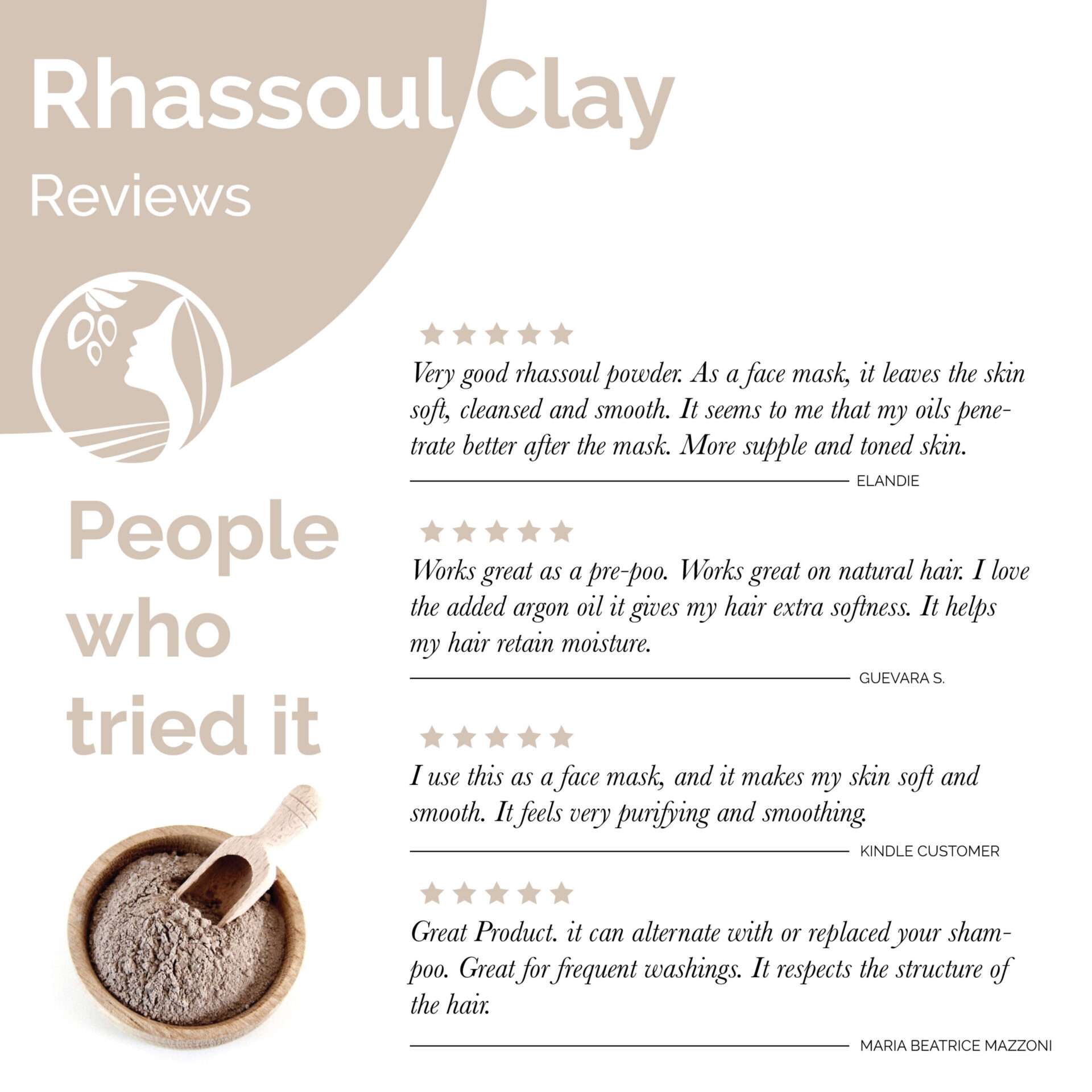
Used as a mask, it washes without lather — which surprises people the first time — and leaves hair soft, with body, and easier to comb through.
How to use it
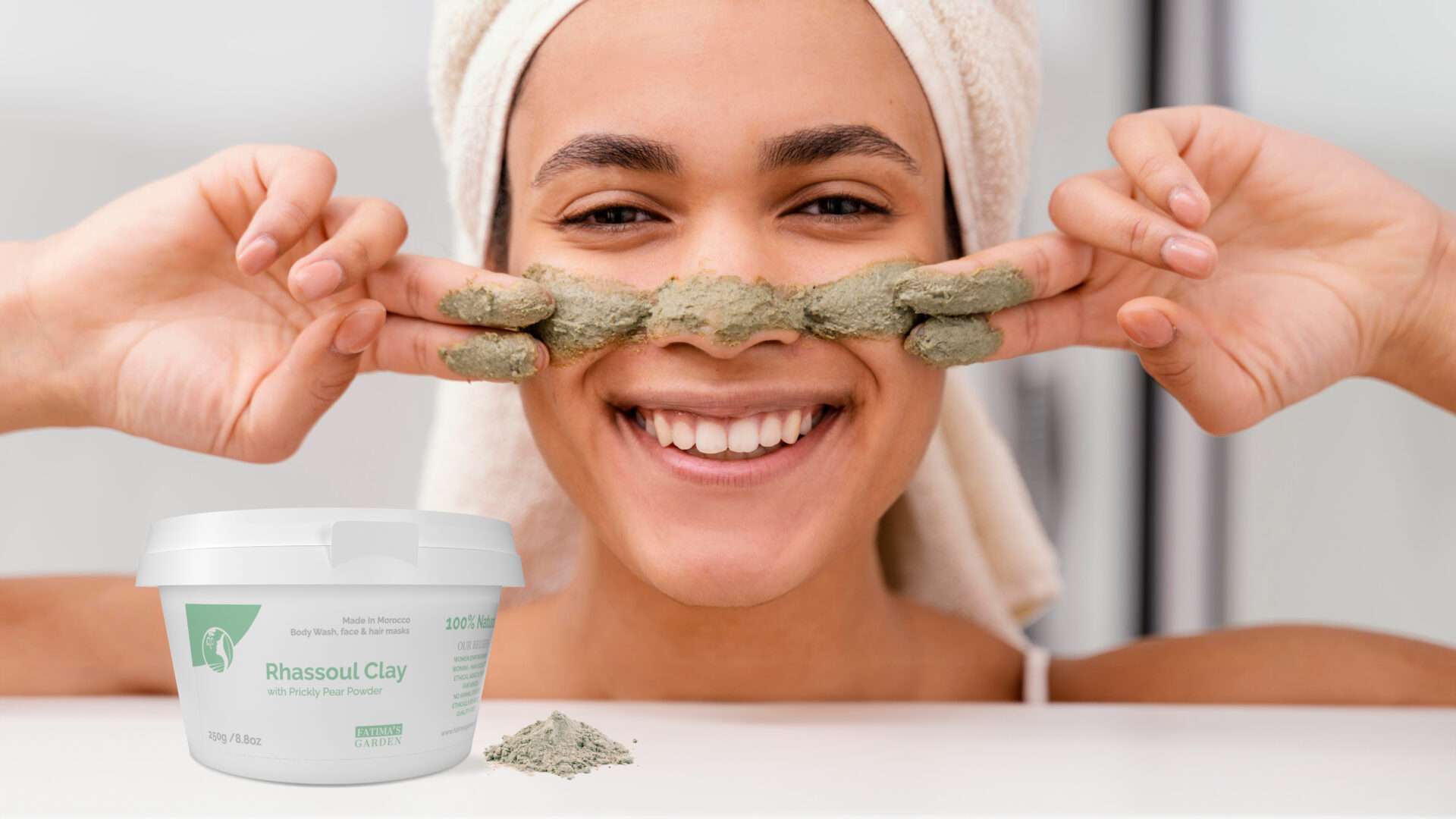
Skin: two spoons of clay and enough warm water, or rose water, to make a paste the thickness of yoghurt. Never metal: a wooden or plastic spoon, in a bowl that is not metal either. Five to ten minutes on the face, then rinse while it is still damp — a mask left to crack pulls at the skin instead of lifting off it.
Hair: mixed thinner, worked through damp hair, left ten minutes, then rinsed longer than feels necessary.
More on ghassoul, with routines and recipes, in our Knowledge Base.
Get the Most from Your Rhassoul
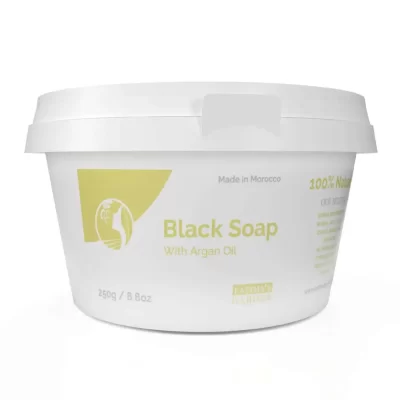
Mix ghassoul with Rose Water instead of tap water for a softer, more fragrant mask. Cleanse first with Moroccan Black Soap, exfoliate using a Kessa Glove, and rehydrate afterwards with Argan Oil.




Reviews
There are no reviews yet.