
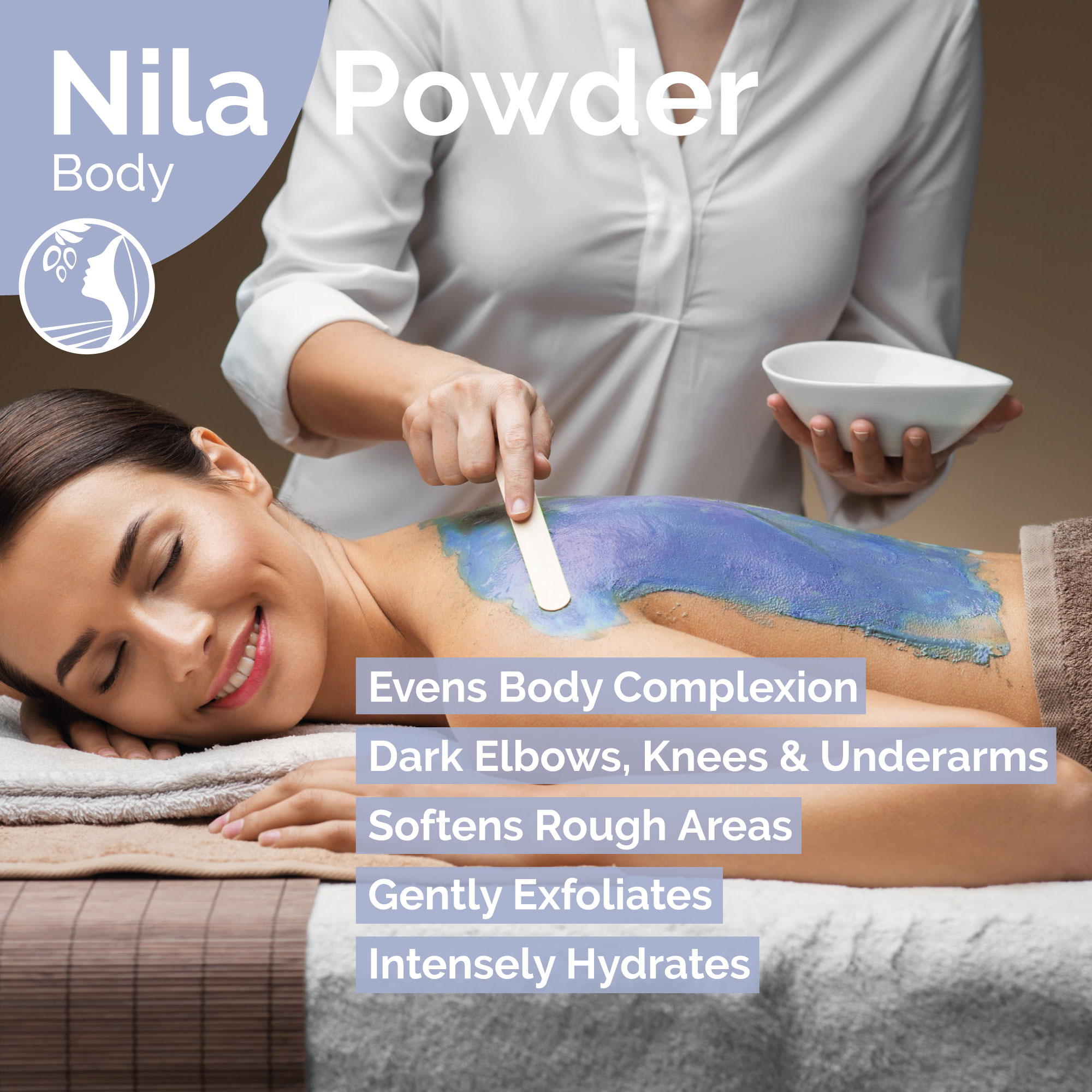
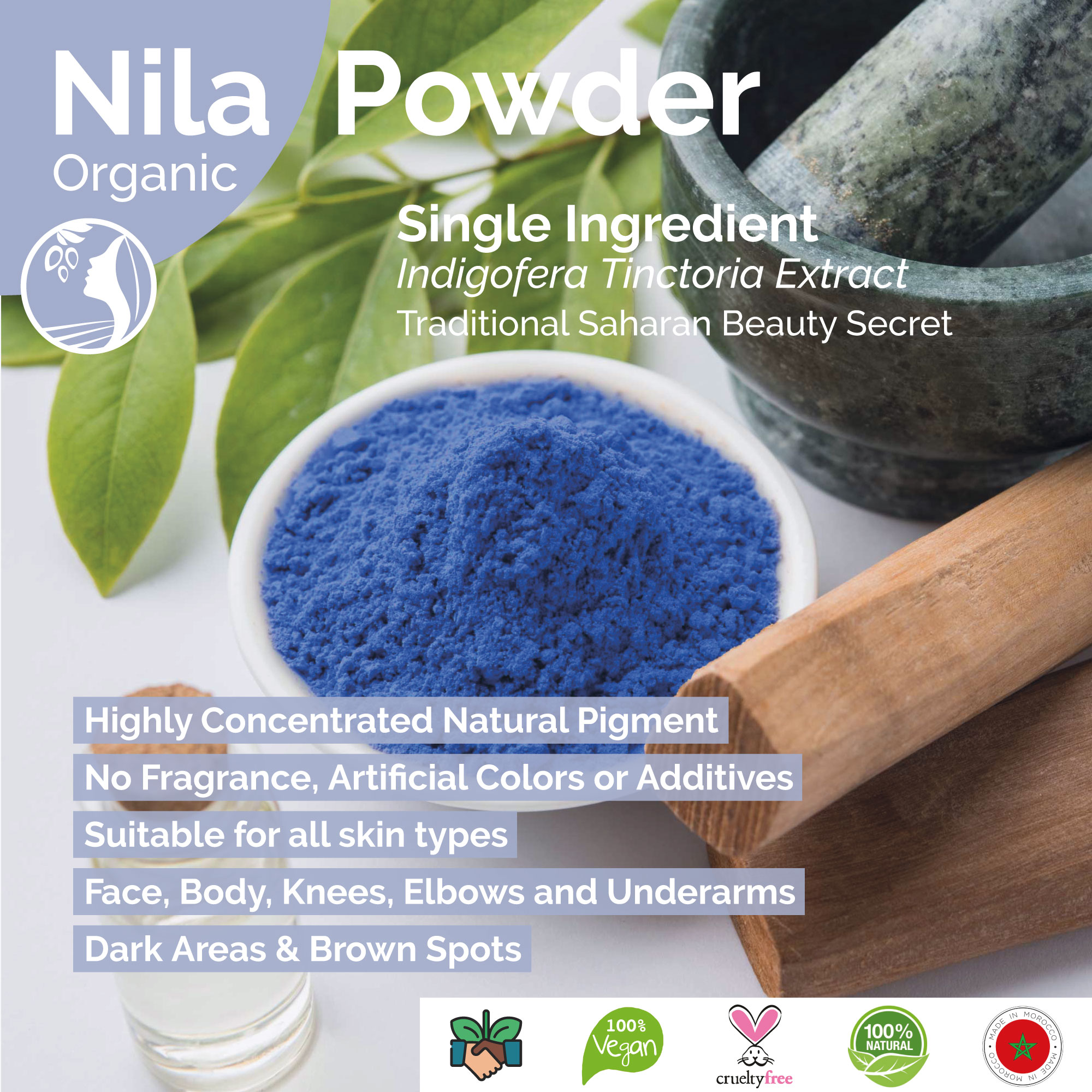
Description
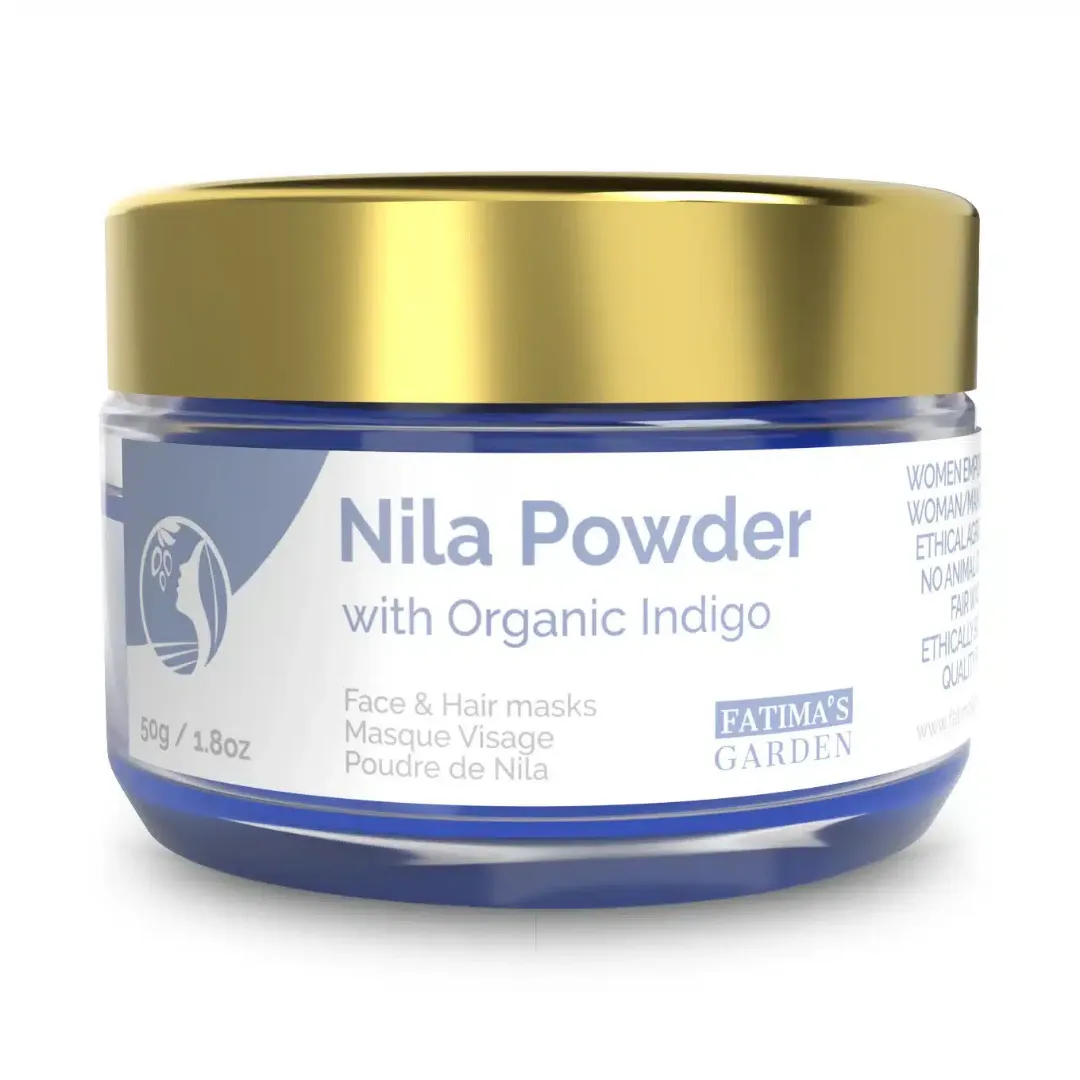
Nila is a pigment, and everything about it follows from that
Nila is Indigofera tinctoria, the indigo plant, dried and ground to a
powder. It reaches Morocco along the same routes it has for
centuries, and it is used in the hammam the way it is used on cloth: for the
colour, and for the feel of it going on cool.
It is worth being clear about what it does not do. It does not exfoliate
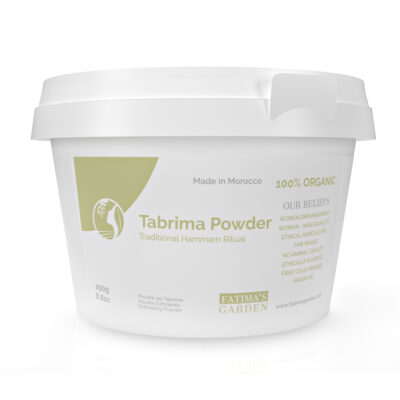
— that is the kessa glove and the
tabrima powder, which have texture; nila has
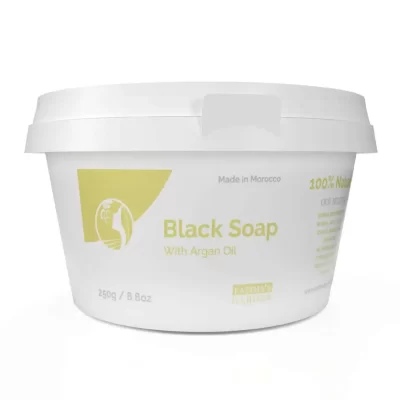
none. It does not cleanse — that is the
black soap. And it is not a treatment for
anything. It is a pigment, sold as a pigment.
Why it is always diluted
Five per cent is the working proportion, roughly half a tablespoon of powder
into a small bowl of oil, yoghurt or wet clay. Dry pigment on damp skin goes on
unevenly and comes off in patches; suspended in something fatty it spreads thin
and rinses out whole. It is also why gloves matter: indigo binds to keratin,
which is what skin, hair and nails are made of, and to cotton, and to grout.
The face recipe
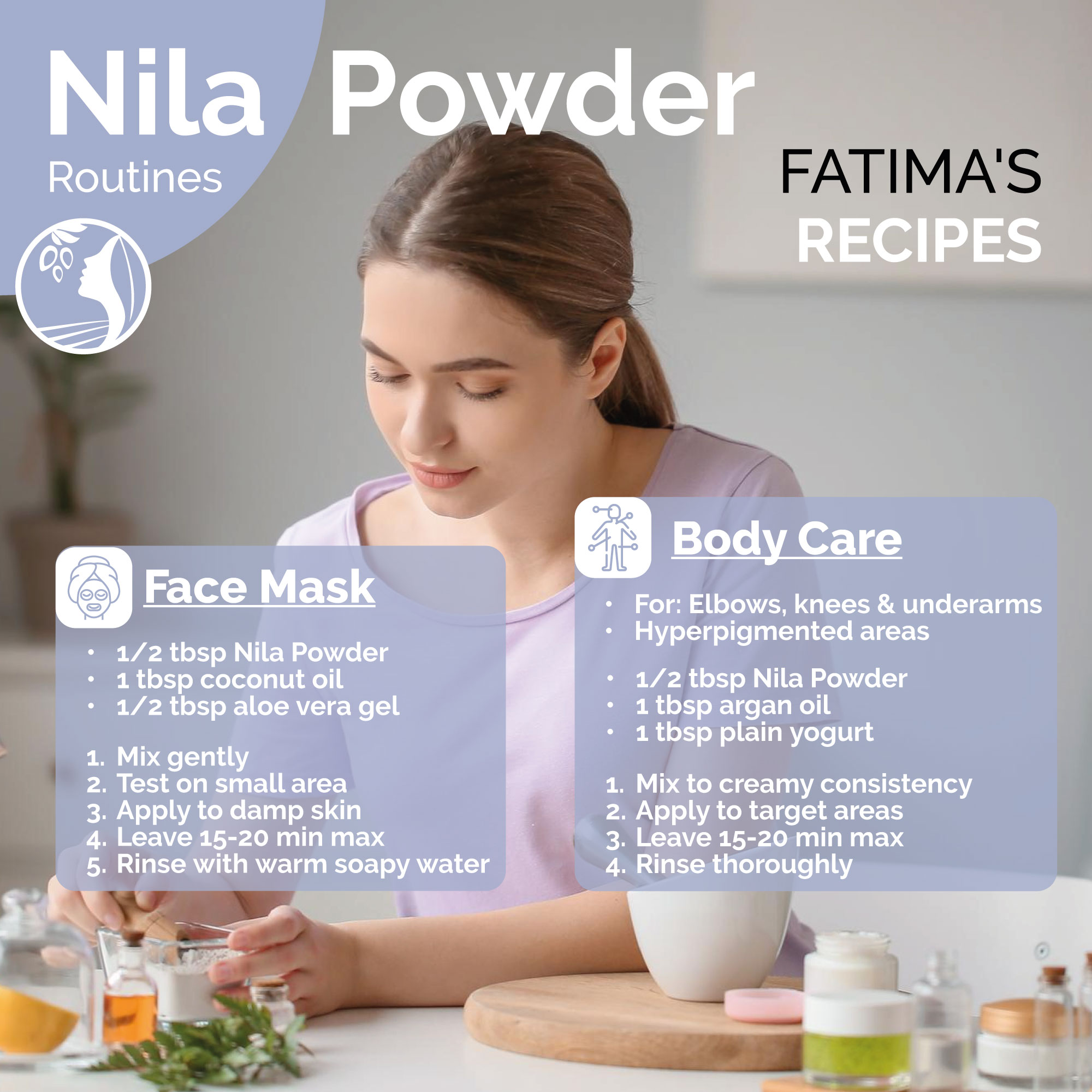
- Half a tablespoon of nila into a glass or ceramic bowl, never metal
- One tablespoon of coconut oil and half a tablespoon of aloe vera gel
- Mix to a smooth cream with a wooden spoon, fresh each time
- Test a small area first, inside the forearm
- On damp skin, fifteen to twenty minutes — twenty-five is the limit
- Rinse with warm, soapy water; water alone leaves a blue cast
For the body
- The same half tablespoon of nila
- One tablespoon of argan oil and one of
plain yoghurt - Same timing, same rinse
Four things to get right
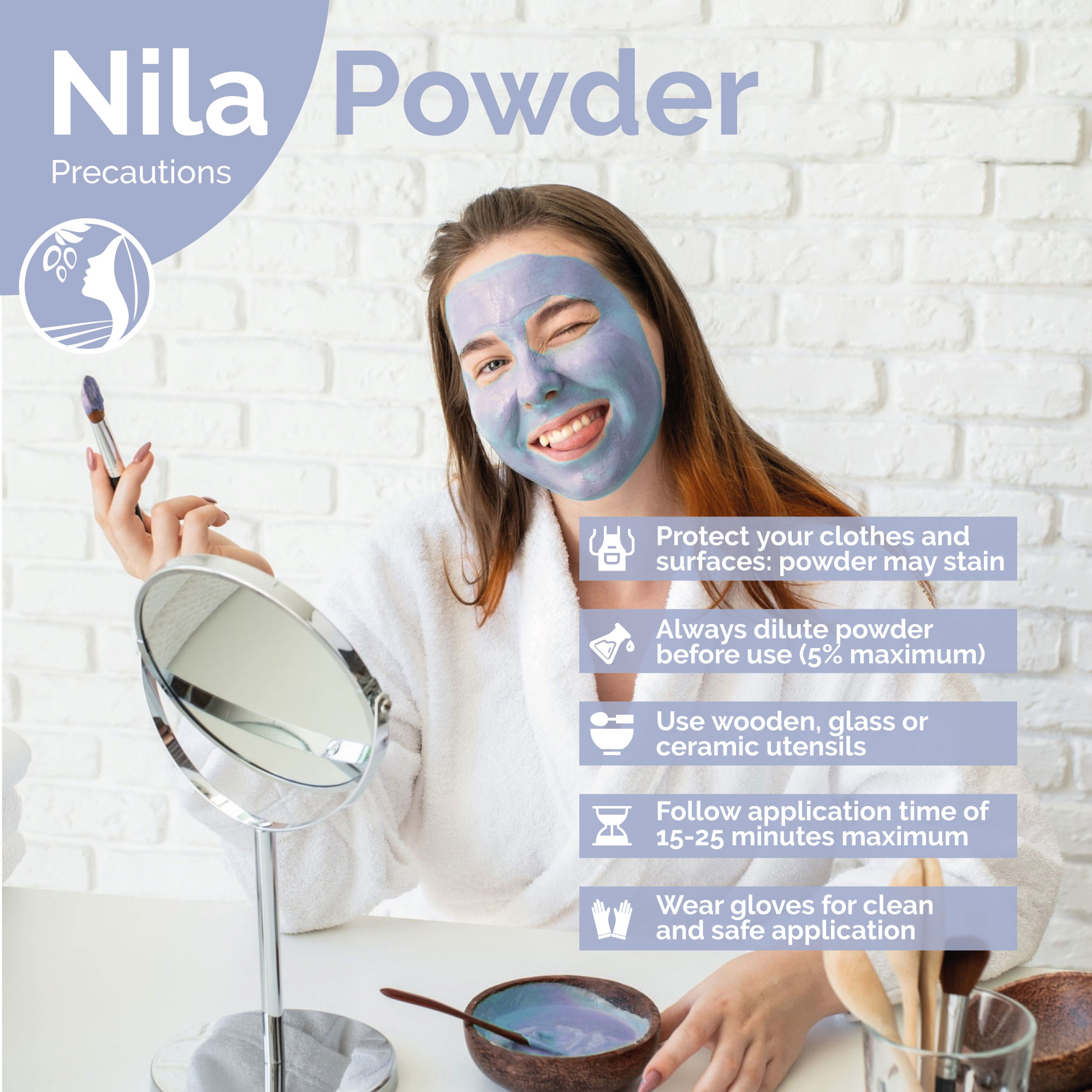
- It stains, and that is the point. Clothes, towels,
worktops, nails, grout. Wear gloves and put down a towel you do not mind. - Five per cent, maximum. Nila is diluted, never used neat,
and more does not work better. - Wood, glass or ceramic. Metal reacts with indigo and dulls
the colour before it ever reaches the skin. - Fifteen to twenty-five minutes. Leaving it on longer
deposits more colour, not more of anything else.
Plain about what it does
Nila is a cosmetic colouring powder. It does not heal, lighten or repair
skin, and it is not a remedy for any condition. Always dilute it, always keep it
away from the eyes, and try a little on the inside of the forearm before the
first full use. If your skin is giving you trouble, ask a doctor rather than a
powder.
How to tell a real one
The ingredient list is one line long. If it runs to several, or names a colour
index number, what you have is a blend or a synthetic pigment. Real nila is a
plant powder: it smells faintly of hay, and it is never uniform under a lens.
Kept dry and closed it lasts five years.
Where it fits
Blue nila is one of the four blends of our
tabrima exfoliating powder. It goes on after
the black soap in the hammam, alongside
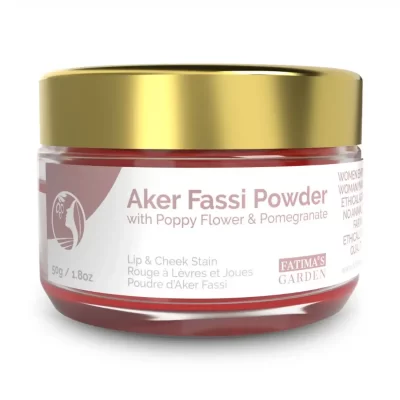
aker fassi, or stirred into
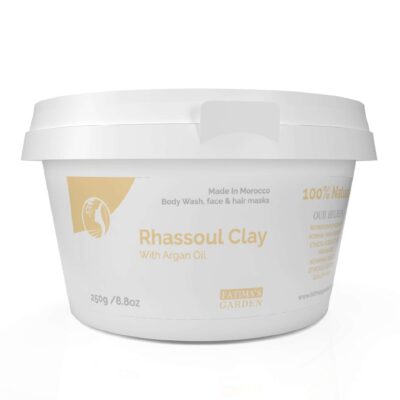
ghassoul clay, which carries it and
rinses away cleanly. The full story is on our
nila page.
Reviews
There are no reviews yet.