Certified organic — Ecocert, EU and USDA
It takes a tonne of fruit to fill one litre. That is the whole story of this oil: it is rare because the seed barely holds any, and expensive because every step of getting to it is done by hand.
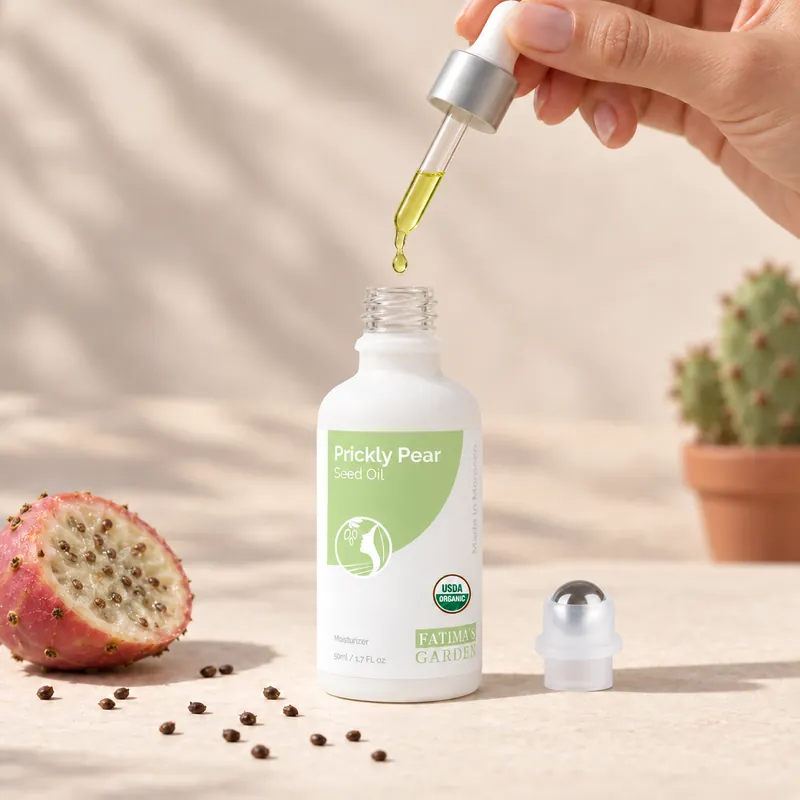
This is the only part of the story that matters, and most sellers skip it. A litre of prickly pear seed oil is the product of a quantity of work that is hard to picture.
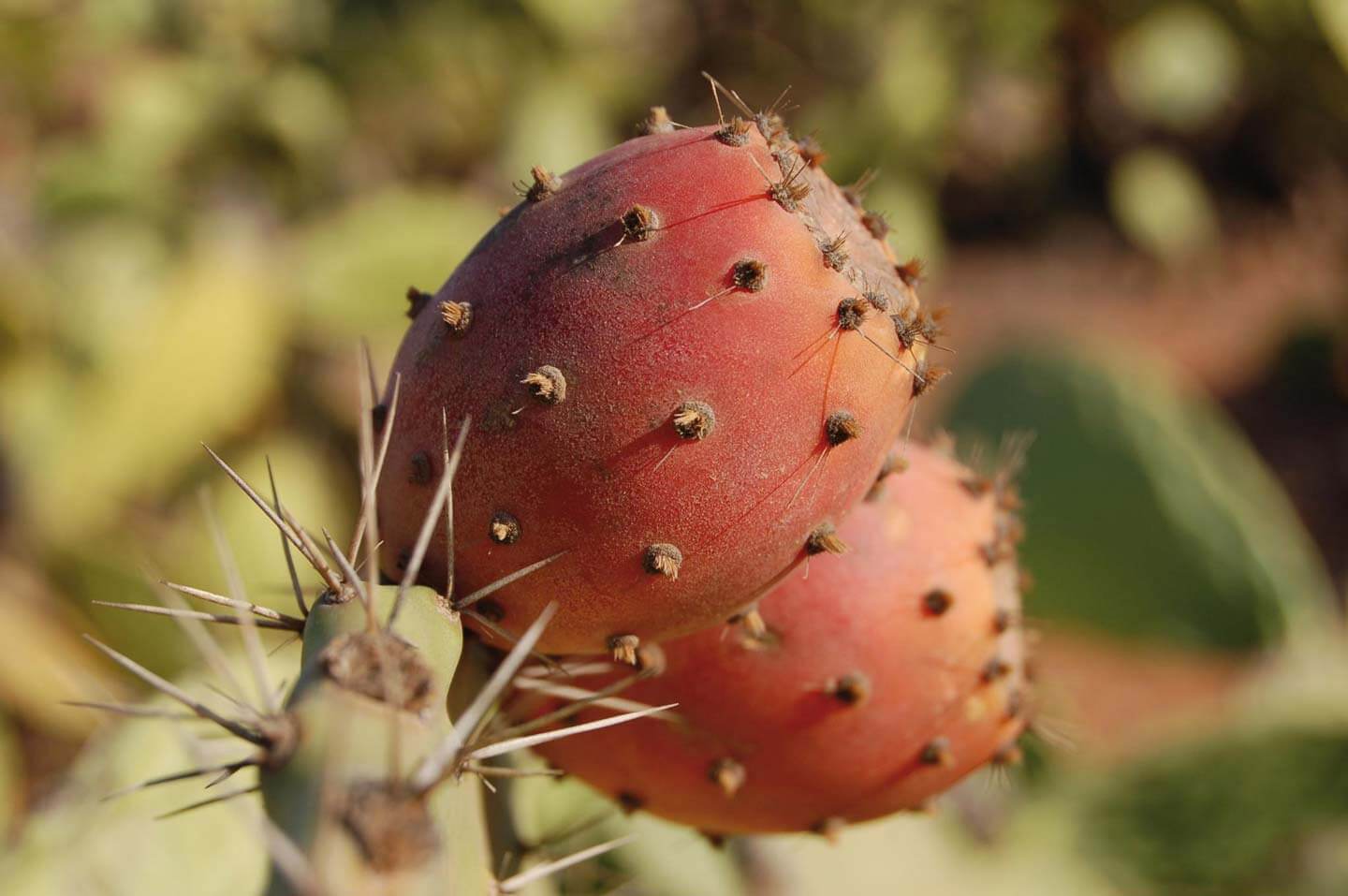
The fruit is harvested by hand from cactus that grows without irrigation and without fertiliser — it survives on what falls from the sky, which is not much. The pulp is washed away, the seeds are dried in the sun, and only then can they be pressed.
A single fruit carries between 150 and 300 seeds, and each seed is about 5 % oil. It takes roughly thirty kilos of dried seed to fill one litre. That is the arithmetic, and it is the reason an oil that looks like any other costs several times more.
Prickly pear seed oil is around 60 % linoleic acid — the fatty acid the skin uses to build its own barrier, and the one it cannot make itself. That is the honest reason skin holds its water better after a few weeks of it.
It carries over 1,000 mg of tocopherols — vitamin E — per kilo. About half as much again as argan oil, which is itself among the richest. Vitamin E is what protects the oil from turning, and what makes it worth pressing cold.
The texture is dry. It sinks in within a minute and leaves nothing behind, which is why it suits the eye area where heavier oils sit and migrate.
What this is, and is not. Prickly pear seed oil is a cosmetic. It moisturises, it softens, it makes the skin look rested. It does not treat a condition, it offers no sun protection, and no oil does. If you have a diagnosed skin condition, ask your doctor before adding anything to your routine. As with any new product, try a little on the inside of the forearm first.
Two or three drops, and not more. It is expensive precisely because a little goes a long way — using more is throwing it away.
Three drops on clean skin, after the rose water, before anything else. It is a night oil — that is when skin repairs.
One drop, tapped with the ring finger. This is the use it is best known for, and the area looks less tired for it.
On the places that stay tight however much cream you use — the sides of the nose, the brow, the jaw.
A drop at night. The skin on the back of the hands is thin and shows its age first.
We publish the analysis because almost nobody does, and because a diluted prickly pear oil is invisible to the eye — it is the numbers that give it away.
| Linoleic acid (omega-6) | 56 – 66 % |
|---|---|
| Oleic acid (omega-9) | 15 – 22 % |
| Palmitic acid | 9 – 14 % |
| Stearic acid | 2 – 4 % |
| Colour | Pale yellow to light green |
|---|---|
| Odour | Faint, slightly green, fades quickly |
| Tocopherols (vitamin E) | over 1,000 mg/kg |
| Texture | Dry, absorbs in under a minute |
| INCI name | Opuntia Ficus-Indica Seed Oil |
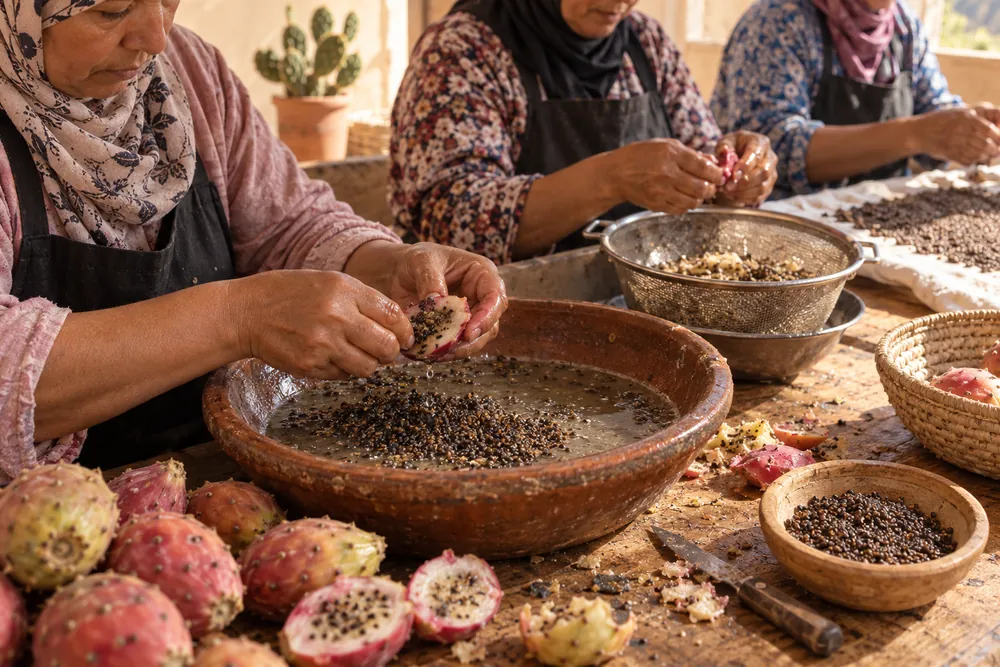
The fruit comes from cooperatives in the south of Morocco, where the work of separating the seed is done by women who have done it for generations. The seeds are cold-pressed once, then filtered. Nothing is refined, nothing is deodorised, nothing is blended.
It is certified organic by Ecocert, under the European organic regulation and the USDA National Organic Program. Both certificates are on our certifications page, with the links to check them yourself.
From 15 ml to 100 ml, in reusable glass. Shipped worldwide with duties paid, so the price you see is the price you pay.
Not a list of everything we make — the three products prickly pear buyers actually put in the same basket. Nearly one in five adds the argan oil, and we sell the two together as The Two Oils.
 Argan oilThe one people pair it with most — nearly one order in five. Lighter, for the daytime, where this one is the night oil. We sell the pair as a set.from $21.60
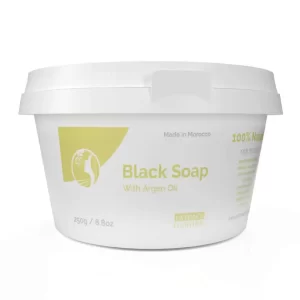 Black soapWhere the hammam starts. An olive paste that lifts the dead skin, so what you put on afterwards actually reaches something.from $21.60
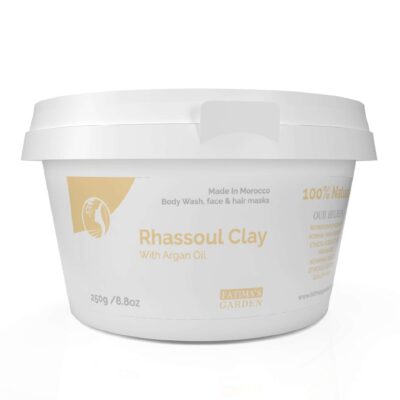 Ghassoul clayMineral clay from the Middle Atlas, for hair and face. It lifts oil rather than stripping it.from $21.60